

Common Travel Mistakes Beginners Make and How to Avoid Them

You’ve bought the tickets, booked the hotel, and downloaded three different translation apps. You think you’re ready for your trip, but many first-time travelers quickly learn that preparation doesn’t always mean readiness. This becomes apparent the moment you face the reality of navigating airport security and dealing with your first foreign ATM. Common travel mistakes like overpacking, missing essential documents, or misunderstanding local customs can easily ruin your trip. Avoid these travel mistakes with our tips for first-time travelers.
Most first-time travelers don’t fail because they lack enthusiasm. They stumble because travel has its own logic. It doesn’t show itself until you are at a train station at midnight. You hold a ticket you can’t read and wonder why no one told you that European dates are day-month-year.
The Overpacking Trap Nobody Warns You About
Here’s what happens: you imagine every possible scenario. Rain in Barcelona. Fancy dinner in Rome. Hiking in the Alps. Beach day in Croatia. Before you know it, you are hauling a suitcase that could double as a small vehicle.
The real cost isn’t the airline fee; it’s the thirty seconds of dread every time you face a cobblestone street. The hotel room restricts movement. You wore the same three shirts the whole trip. The other seven stayed folded at the bottom.
Pack half of what you think you need, then remove two more items. You won’t regret the space. You will regret the weight.
And here’s something nobody tells you: most places have laundromats or sinks. Water and soap exist everywhere humans live. This seems obvious until you are packing your eighth pair of underwear “just in case.”

Money Mistakes That Cost More Than Money
Currency exchange booths at the airport aim to profit from your panic. The rates are terrible, but they expect you to need cash now, even before you leave the terminal. That convenience costs you roughly 15-20% of your money.
Instead, withdraw from ATMs once you arrive. Yes, there’s usually a fee. It’s still much less expensive than the exchange booth. Here’s the tricky part: when the ATM asks if you want their conversion rate or your bank’s, always pick your bank. That “convenient” conversion the ATM offers? Another markup you don’t need.
Notify your bank before you leave. This advice seems obvious, but travelers still get their cards frozen abroad. Then, they waste half a day on international calls to unfreeze them. Ten minutes before your trip saves you hours of frustration abroad.
Also, carry two cards from different banks. If one gets compromised or deactivated, you are not stranded.

The Itinerary Problem: Too Much vs. Too Little
First-time travelers usually fit into two groups. Some plan every hour like it’s a military mission. Others plan nothing and hope to just explore.”
Both approaches have the same flaw: they don’t account for reality.
The overplanners burn out by day three. They’ve booked tickets for seventeen attractions and made restaurant reservations all over town. But they didn’t leave any time to rest. Their feet hurt, they are jet-lagged, and they just want to sit in a café and watch people for an hour. Rigid schedules turn travel into work.
The under planners waste time. Not the romantic, wandering-through-streets kind of time the standing-in-their-hotel-room-googling-what-to-do kind. Or worse, they miss out entirely on things that needed advance booking and are now sold out.
The middle path: have a loose structure. Know the two or three things you absolutely want to do each day. Book those. Leave the rest flexible. This gives you direction without suffocation.
Underestimating Transit Time (and Exhaustion)
On a map, everything looks close. In reality, nothing is as close as it looks.
That museum across the city? It’s not the ten-minute journey Google Maps suggested. It takes ten minutes for locals who know the right metro line, where to enter, and how to buy tickets quickly. For you, it’s thirty minutes. Maybe forty if you take a wrong exit and surface three blocks away from where you intended.
New travelers often pack their days assuming transit works like teleportation. They don’t think about getting lost, waiting for trains, or how much longer it takes to get around new places compared to familiar ones.
Build in buffer time. If something is supposed to take twenty minutes, assume thirty-five. This small change reduces stress from being late, missing reservations, or feeling too frazzled to enjoy yourself.
And exhaustion nobody tells you how tired travel makes you. Not sleepy or tired. Feeling mentally tired from using a new language, learning new systems, and making constant decisions. By day four, your brain is asking for a break even if your body feels fine. Plan lighter days. Give yourself permission to do less.

Ignoring Local Norms Until It’s Awkward
Every place has unspoken rules. You won’t know them all, but you should know some.
In Japan, you don’t eat while walking. In much of Europe, you greet shopkeepers when you enter a store. In some countries, haggling is expected; in others, it’s offensive. Tipping customs vary wildly generous in the U.S., minimal in Japan, built into the bill in parts of Europe.
You don’t need to become a cultural expert overnight, but fifteen minutes of research prevents most awkward moments. The goal isn’t perfection. It’s an effort. Locals can tell when you are trying, and that goodwill matters more than getting every detail right.
Also, learn basic phrases. Not to achieve fluency just “hello,” “thank you,” “excuse me,” and “I don’t speak [language]” in the local tongue. It’s a small gesture that changes interactions. People are more patient, more helpful, more willing to communicate when they see you are making an effort.
Staying Too Connected (or Not Connected Enough)
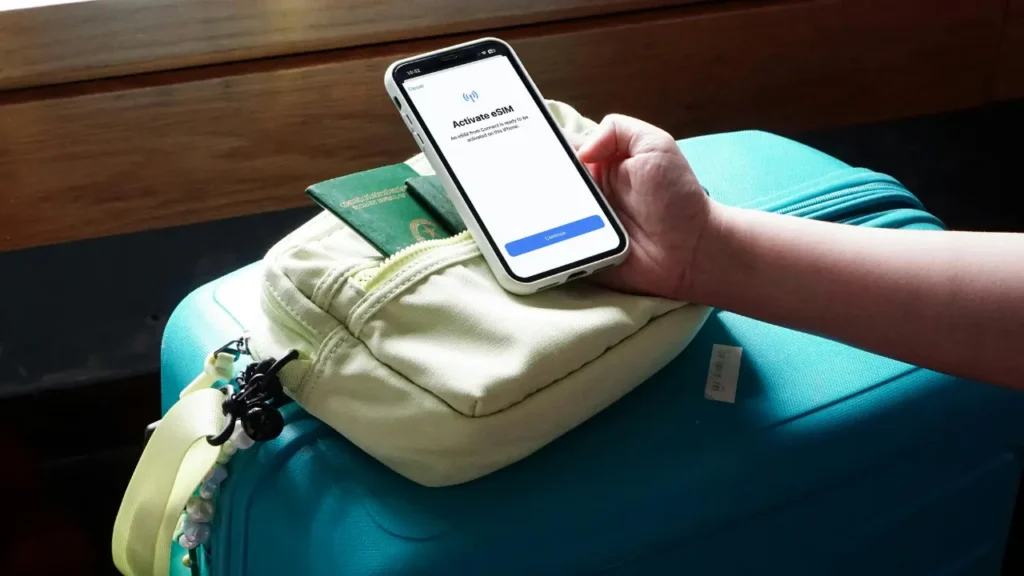
Some travelers refuse to get local SIM cards or international plans because they think they will embrace the offline experience. Then they get lost with no GPS, can’t find their Airbnb, and can’t contact anyone. Being unreachable isn’t romantic when you are stuck.
On the flip side, others never look up from their phones. They are so busy documenting everything that they are not actually present for any of it. They see the sunset through a screen. They view the museum through a camera lens and the meal through an Instagram filter.
Both extremes miss the point. Have connectivity for practical reasons—navigation, communication, emergencies. But also have boundaries. You don’t need to check email at the Colosseum. The group chat can wait until you are back at the hotel.
The Souvenir Spiral
Souvenirs feel special while you are away. But once you are home, you find a cheap keychain that says “Paris” in a touristy font. You don’t remember buying it. You just remember feeling like you should buy something.
The best souvenirs are the ones you’d actually want regardless of where they are from. A book by a local author and a piece of art from a street vendor whose work you admired. Something useful or beautiful or meaningful, not something that screams “I went to a place.”
Or skip physical items entirely. Take photos of moments, not landmarks. Write in a journal. Collect experiences, not objects.
Daniel Moore is the voice behind The Travel Paths, sharing travel stories shaped by culture, everyday experiences, and the quieter moments that make journeys meaningful.