Smart Packing Tips Every Traveler Should Know

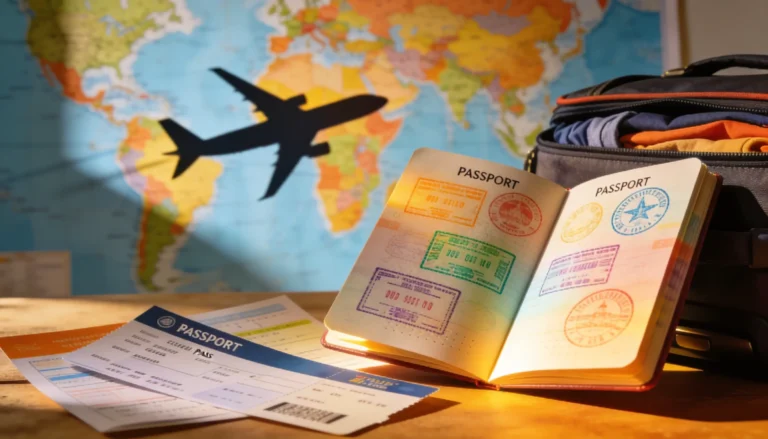
The night before a trip has its own kind of chaos. Clothes spill from open drawers, and a travel adapter hides where you thought you left it. Packing isn’t just about fitting things into a bag; it’s a balance of excitement and restraint. Smart packing tips, like rolling clothes to save space, using packing cubes to stay organized, and prioritizing multi-purpose items—can make it all a bit smoother and more efficient.
I have seen seasoned travelers approach packing like a craft. They fold with purpose, edit with wisdom, and seem to know exactly where every sock will live. But that mindset comes from lessons learned the hard way, missed flights because of overweight luggage, wrinkled clothes before an important meeting, or a missing charger in a city where every plug looks foreign.
Smart packing isn’t really about being minimal; it’s about being intentional.
The Art of Choosing What Truly Matters
Here’s something few people admit: most of what we pack never sees daylight during a trip. That “just in case” sweater stays at the bottom of the bag. Those extra pairs of shoes? They take up space better used by memories you could bring home instead. The best packers I know start with one honest question, what’s going to earn its place in my bag?
Think about your travel rhythm. If you tend to spend whole days exploring, your outfits need to move with you, not weigh you down. Breathable fabrics, versatile colors, and layers that can handle shifting weather will always win over fashion statements that only survive one photo. Smart travelers don’t just pack for occasions, they pack for patterns of use.
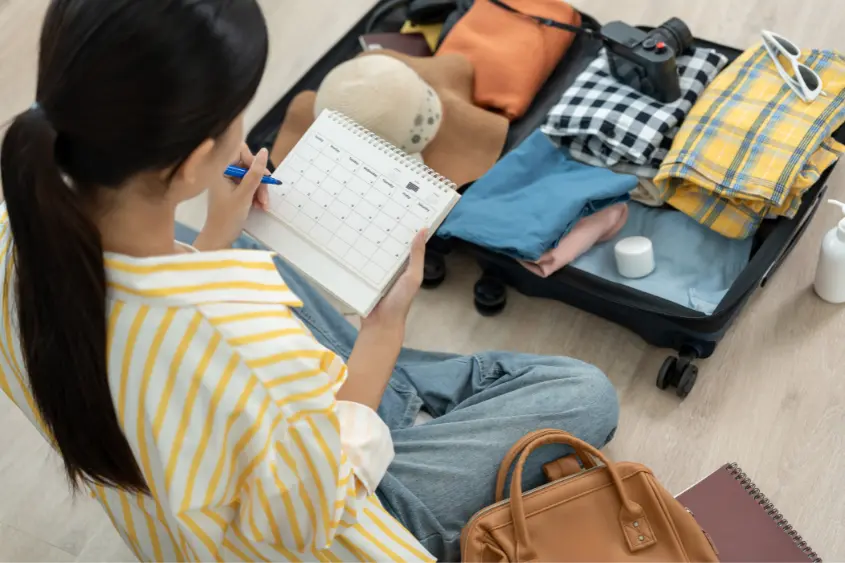
A simple trick: lay out everything you think you want to bring, then remove one-third. It feels ruthless, but almost every traveler walks away relieved, and lighter.
Space Is Strategy, Not Science
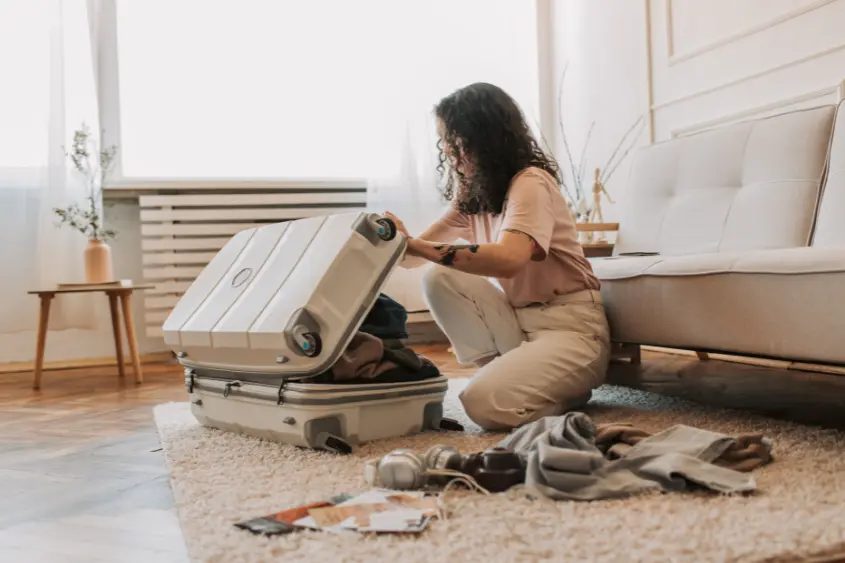
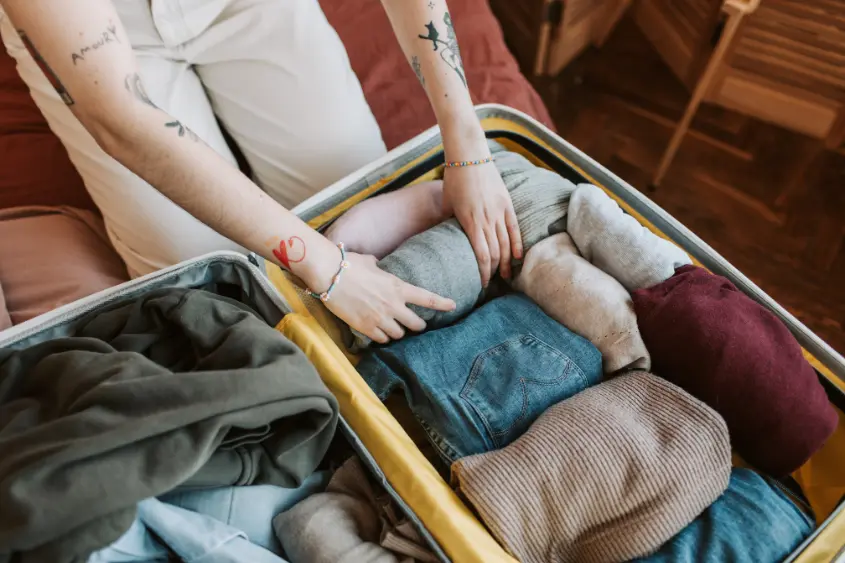
Every trip teaches you something about space. The way you roll versus fold clothes says more about your travel personality than you’d expect. Rolling saves space and reduces wrinkles, but folding makes items easier to see and access. The truth? The best method is a mix. Roll soft items like t-shirts and pajamas, and fold structured ones, like blazers or jeans. Fit the rolled ones into the gaps; packing cubes keep it all from turning into fabric soup.
And while we’re at it, packing cubes aren’t just trendy Instagram gadgets. They are tiny, portable forms of sanity. They let you grab your “sleep section” or “daywear” without tearing the whole bag apart. The feeling of unzipping your cube and finding everything exactly where it belongs, that’s the closest travel gets to meditation.
Compression bags also make sense for long trips, but they’re unforgiving. You trade easy unpacking for compact storage, which is fine if you’re flying once. If you’re hopping city to city, though, you will start to resent that plastic vacuum you created.
The Unspoken Hero: Weight Distribution
Every traveler knows that one bag that insists on toppling over at the slightest touch. That’s bad packing physics. The weight should sit near the wheels if you’re rolling, or close to your back if you’re carrying a backpack. Heavy items like shoes, chargers, or toiletries, belong low and centered. Think of yourself as balancing a mobile sculpture where each item has its place and purpose.
Smart packers also remember something most tourists forget: airport security exists. Keeping electronics and liquids accessible will save you from the performance art of unzipping every layer while others watch.
The Forgotten Zone—Toiletries and Tech
No one loves dealing with the “liquids bag.” But underestimating that small pouch can cost you time, comfort, and even your skin. Travelers who know the pain of dry airplane air or unfamiliar hotel products tend to create a ritual kit—lightweight, leak-proof, and familiar. Refillable bottles are worth the small investment, both for eco and emotional sanity.
Tech deserves its own ecosystem, too. The modern traveler’s essentials go beyond chargers: adapters, power banks, noise-canceling headphones, and occasionally, a backup cable you’ll thank yourself for later. Keep these in a separate pouch; it saves you from the stress of tangled cords at airport security or hotel check-in counters.
Still, digital minimalism applies here as well. If you won’t use your tablet because your phone handles everything, leave it. The fewer items that need charging at night, the calmer your travel routine becomes.
Shoes, the Eternal Dilemma
If there’s one item that tests every traveler’s discipline, it’s shoes. They’re bulky, awkward, and emotionally loaded, you will tell yourself I might need these just in case. But three pairs is almost always enough: one for walking, one for something slightly dressier, and one for travel or lounging. Everything beyond that enters “fantasy territory.”
One golden rule: never pack new shoes. A trip is not a test drive for leather. Blisters have a way of rewriting travel plans faster than bad weather. If space allows, stuff smaller items like socks or belts inside shoes; it’s a small gesture that adds up.
The Carry-On Philosophy
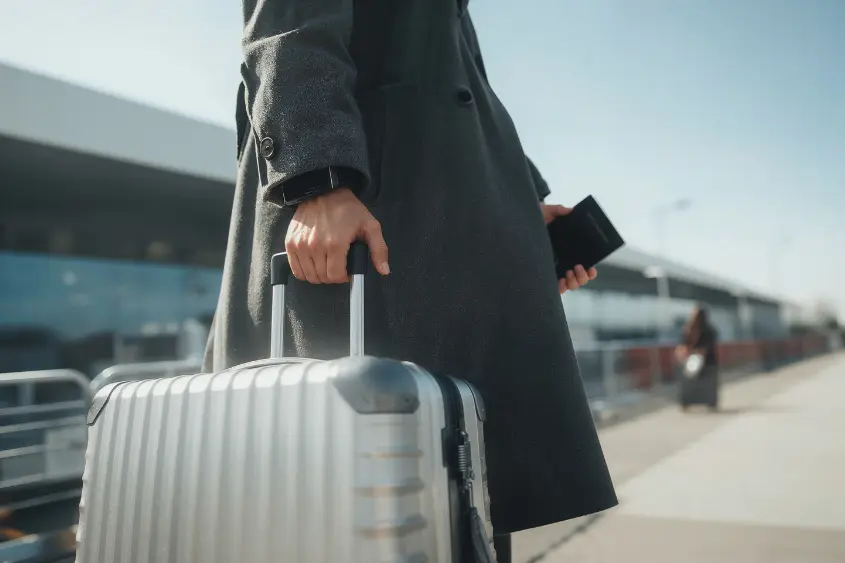
People who rely solely on a carry-on aren’t just efficient; they’re strategic thinkers. Traveling light isn’t about thrift, it’s about flexibility. When your bag fits overhead, you skip baggage claims, dodge lost luggage drama, and gain the freedom to pivot. It also forces you to think like an editor instead of a hoarder.
But packing light doesn’t mean sacrificing comfort. Comfort is efficiency’s twin: lightweight fabrics, compact toiletries, and a small laundry detergent sheet can extend a wardrobe far beyond what it looks like on paper. There’s a quiet joy in realizing you have everything you need, and nothing more.
When Packing Becomes a Mindset
The smartest travelers don’t treat packing as preparation, they treat it as part of the journey. They learn from their bags after every trip: what they actually used, what stayed zipped, what they wished they’d left behind. Over time, the bag becomes a mirror of your habits. Some travelers carry extra with emotional weight: a novel they hope to read, or a scarf that reminds them of home. Others trim everything down until their luggage looks like pure movement.
There’s no “one” right way to pack, only what lets you feel free once you’re moving. The trick is attention. Awareness transforms packing from a chore into a quiet art form.
Packing for the Unexpected
Ironically, the Smart Packing isn’t about predicting the predictable, it’s leaving room for the unexpected. A little empty space in your bag is like leaving open pages in a journal. You’ll fill them with something new a street market found in Lisbon, a handmade bowl from Chiang Mai, a scarf that smells faintly of a place you don’t want to forget.
Smart travelers learn to plan for curiosity, not just efficiency. They pack small foldable totes or lightweight duffels, not because they expect to shop, but because adventure often looks like unplanned detours.
The Emotional Weight of Lightness
There’s something psychological about traveling light. It changes how you move through airports, through cities, through chance encounters. You walk differently when your shoulders aren’t resisting gravity. You notice more when you’re not worried about losing things.
Smart Packing isn’t a set of hacks, it’s a philosophy of trust. Trust that you’ll find what you need when you get there. Trust that you’ll adapt, improvise, and make do. It’s amazing how a thoughtfully packed bag can become a quiet symbol of confidence.
Daniel Moore is the voice behind The Travel Paths, sharing travel stories shaped by culture, everyday experiences, and the quieter moments that make journeys meaningful.