How to Avoid Tourist Scams While Travelling Abroad

You are at the Trevi Fountain, ready to toss in a coin. Suddenly, a man in a police-like uniform comes up and asks for your passport. In such situations, knowing how to avoid tourist scams is crucial to keeping yourself safe. Travel scams often don’t announce themselves with flashing red flags, and they take advantage of your mindset when you are abroad
That split-second hesitation is your instinct talking, and it’s worth listening to. Travel scams don’t always announce themselves with flashing red flags. They are made to tap into your mindset when you are abroad. You feel a bit lost but want to be polite. You hope the strangers around you share your excitement about your visit.
Scams succeed because they tap into your psychology at that moment. You are jet-lagged and in a new place. You are struggling with a language you don’t know. You want to avoid looking like the lost tourist that you are. That’s the opening.
The Taxi Driver Who Doesn’t Know Where Your Hotel Is
Let’s start with one of the oldest plays in the book because it still works remarkably well. You land at the airport, exhausted from your flight, and grab what appears to be an official taxi. The driver nods enthusiastically when you mention your hotel, but twenty minutes into the ride through increasingly unfamiliar neighbourhoods, he suddenly doesn’t recognise the address. He suggests another hotel, his cousin runs it, much nicer, better price.
Here’s what’s actually happening: he knew exactly where your hotel was. But taking you on a scenic detour racks up the meter, and if he can redirect you to a hotel that pays him commission, even better. The exhaustion factor is what scammers count on. You are tired; you want to arrive somewhere, and the path of least resistance starts to look appealing.
The counter-move isn’t complicated. Take a screenshot of your hotel location before you land. Have the address in the local language if possible. And here’s the part that feels slightly paranoid until it saves you: watch your route on your phone’s map. If the driver notices you are tracking the journey, the mysterious confusion about your destination tends to clear up immediately.

When Friendliness Comes With a Price Tag
There’s a specific kind of scam that bothers me more than the obviously transactional ones: the friendship scam. Someone approaches you at a market or a tourist site, strikes up a conversation about where you are from, mentions they have family in your country, and suddenly, you are being invited to their uncle’s carpet shop for tea. No pressure, see the beautiful craftsmanship.
The psychological manipulation here is more sophisticated. They are not presenting as vendors; they are presenting as locals who want to show you the “real” city. And that uncle’s shop does have beautiful carpets. But you are going to be there for two hours, drinking tea, hearing stories, and feeling increasingly uncomfortable about leaving without buying something.
The tricky part is that some of these encounters are genuine. I have met travellers who made real friendships this way, who were invited into homes and had experiences you can’t buy. The difference is usually in how the encounter starts. Genuine interactions tend to develop naturally over time, not with someone approaching you specifically because you are holding a camera and wearing sneakers that scream “tourist.”
If you find yourself in that carpet shop and realise you don’t want to be there, you are allowed to leave. You don’t owe anyone a purchase because they were friendly. This is something I had to learn: politeness doesn’t require you to ignore your gut feeling or drain your wallet.
The Petition Scam and Its Variations
Picture this: you are walking near a major landmark and a young woman, sometimes with a child, approaches with a clipboard. She’s collecting signatures for a charity for deaf children, orphans, something unmistakably sympathetic. You sign because refusing feels cruel. Then she points to a donation column where previous “signers” have written amounts like €20, €50. Now you are expected to contribute.
The clipboard might be real or completely fabricated. Either way, you have just been socially engineered into feeling obligated. The moment you signed, you became invested in the interaction. Walking away after that feels harder.
I watched this play out in Paris once, and what struck me was how the scammer adapted based on who approached. Younger tourists got the full performance with the child present. Older travellers got a more subdued approach. They are reading their audience in real-time.
The simplest defence is also the most uncomfortable for many people: you can say no. You don’t need to explain, you don’t need to feel guilty. Real charities have websites, established donation channels, and don’t rely on clipboards near tourist attractions.

The ATM Observer
This one operates in silence. You are at an ATM, you withdraw money, and you walk away. What you didn’t notice was the person standing just a bit too close, watching you enter your PIN. Or worse, the device attached to the card slot that’s capturing your information.
ATM skimming requires you to be unobservant, which is easy to do when you are focused on the transaction. The newer variations are subtle, tiny cameras, overlay devices that match the machine’s colour scheme perfectly. I have started treating ATM use abroad with the same caution I’d apply to anything valuable: check for anything that looks added on or unusual, cover the keypad when entering your PIN even if no one’s around, and use machines inside banks when possible rather than standalone street ATMs.
If your card is compromised, you won’t realise it for days, when you see unauthorised charges. By then, you are in another city or already home, and the hassle of dealing with it from abroad is significant.
The Hotel Impersonator Call
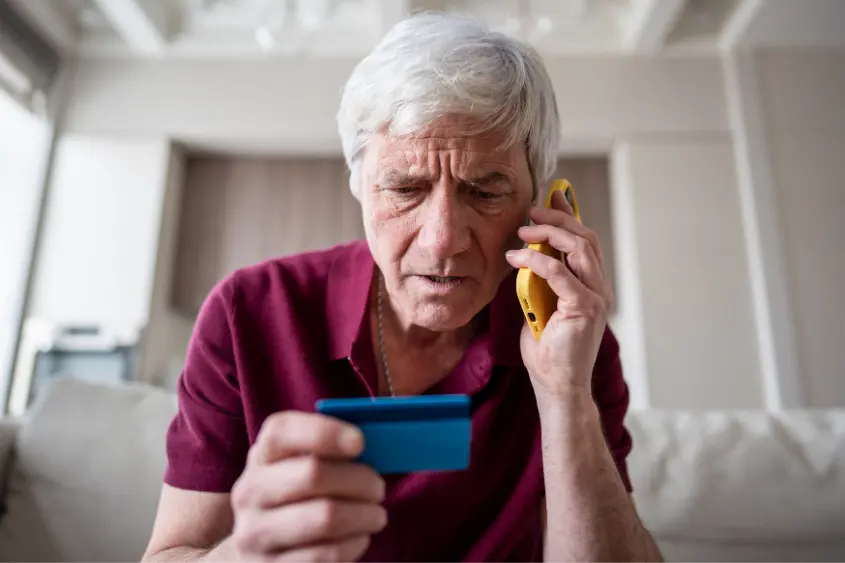
You check into your hotel, settle into your room, and an hour later the phone rings. Front desk, they say. There’s been a problem with your credit card; they need to verify the information. Can you provide the number again?
This isn’t the front desk. This is someone who knows you just checked in, possibly because they watched you do so, and is gambling that you are still in that slightly addled post-arrival state where you might not question the call.
The tell is that legitimate hotels will ask you to come to the front desk for payment issues. They won’t request sensitive information over the phone. But in that moment, when you are trying to get settled, and someone in an official capacity says there’s a problem, the instinct is to fix it quickly.
What Protection Actually Looks Like
The goal is not to travel in a state of constant suspicion. That would ruin the whole point of going somewhere new. But there’s a middle ground between paranoid and naive that’s worth finding.
It comes down to pattern recognition. Most scams follow predictable structures: they create urgency, they isolate you from other information sources, they make you feel like you are getting special treatment or access, or they leverage your desire not to offend.
When something feels off, that feeling usually has a reason, even if you can’t articulate it immediately. You are picking up on incongruities: the “police officer” who’s not quite in uniform, the “taxi” that doesn’t have official markings, the “friendly local” whose friendliness feels rehearsed.
The other element that helps is simply being less of an obvious target. Scammers operate on volume. They are looking for the easiest marks, not the most challenging ones. Walking with purpose even when you are lost, not displaying expensive electronics conspicuously, and not looking frantically at maps on street corners, these small adjustments change how you are perceived.
You are not trying to become invisible. You are just trying to look slightly less like someone uncertain about everything around them.
The Real Cost
Losing money to scams is frustrating but often recoverable. What lasts longer is the feeling of being fooled, and how it changes your trust in people. I have seen travellers become guarded after one bad experience, treating every local like a threat. The key is to stay alert without closing off. Most people aren’t scammers; some truly want to help. Spotting manipulation while staying open to real moments is the balance.
You’ll likely face at least one scam attempt abroad, but recognising it and walking away means the system worked. These scams succeed because they’re designed by people who understand human behaviour. What matters is what you learn: sharper instincts, pattern recognition, and confidence in new places. That’s not just about avoiding scams; it’s about learning to travel smarter.
Daniel Moore is the voice behind The Travel Paths, sharing travel stories shaped by culture, everyday experiences, and the quieter moments that make journeys meaningful.