
Best Cities in Spain: The Complete Guide to 25 Cities Worth Visiting

If you’re trying to figure out which cities in Spain deserve a spot on your itinerary, here’s the short answer: Barcelona and Madrid for a first trip, Seville and Granada for history and flamenco, San Sebastián for food, and at least one smaller town – Ronda, Toledo, or Cáceres – to see the Spain that doesn’t make the postcards. But that answer only gets you so far, because Spain isn’t really a country you visit once and check off. It’s a collection of regions that barely resemble each other, and picking the wrong combination of cities is the single biggest reason people come home feeling like they rushed through a highlight reel instead of experiencing the place.
I’ve built this guide around the questions people actually ask when planning a Spain trip: how many cities to visit, how many days each one needs, what things really cost, and which cities suit which kind of traveler. It covers all 25 cities worth your time, plus itineraries, budgets, transportation, and the mistakes that trip up even experienced travelers.
Spain works as a destination because it refuses to be one thing. The north is green, rainy, and obsessed with pintxos. The south is dry, hot, and shaped by eight centuries of Moorish rule. The Mediterranean coast moves at beach-town speed. Madrid sits in the middle of it all, landlocked and proud of it. You could spend a month here and still find a region you haven’t touched.
Table of Contents
- Quick Comparison Table
- Understanding Spain’s Regions
- The 25 Best Cities in Spain
- Best Cities by Travel Style
- Suggested Spain Itineraries
- How Much Does Spain Cost?
- Getting Around Spain
- Best Time to Visit Spain
- Common Travel Mistakes to Avoid
- Local Tips and Etiquette
- Frequently Asked Questions
Quick Comparison Table
| City | Best For | Days Needed | Budget (per day) | Top Attraction | Crowd Level | Best Season |
|---|---|---|---|---|---|---|
| Barcelona | Architecture, beaches, nightlife | 3-4 | €90-150 | Sagrada Família | Very High | Spring/Fall |
| Madrid | Museums, food, city life | 3-4 | €80-140 | Prado Museum | High | Spring/Fall |
| Seville | Flamenco, history, romance | 2-3 | €70-120 | Alcázar of Seville | High | Spring/Fall |
| Granada | Moorish history, mountains | 2-3 | €60-110 | Alhambra | High | Spring/Fall |
| Valencia | Beaches, food, family trips | 2-3 | €65-110 | City of Arts and Sciences | Medium | Year-round |
| Malaga | Beaches, art, base for Costa del Sol | 2-3 | €65-115 | Picasso Museum | Medium-High | Spring/Summer |
| Cordoba | History, day trips | 1-2 | €60-100 | Mezquita | Medium | Spring/Fall |
| Bilbao | Art, Basque culture | 2 | €80-130 | Guggenheim Museum | Medium | Summer |
| San Sebastian | Food, beaches, luxury | 2-3 | €100-160 | La Concha Beach | Medium | Summer |
| Toledo | Day trip, medieval history | 1 (day trip) | €50-90 | Toledo Cathedral | Medium | Spring/Fall |
| Salamanca | University town, architecture | 1-2 | €60-100 | Plaza Mayor | Low-Medium | Spring/Fall |
| Santiago de Compostela | Pilgrimage, Galician culture | 2 | €60-100 | Cathedral of Santiago | Medium | Summer |
| Ronda | Views, romance, day trip | 1-2 | €60-100 | Puente Nuevo | Medium | Spring/Fall |
| Cadiz | Beaches, oldest city in Europe | 2 | €60-100 | Cadiz Cathedral | Low-Medium | Summer |
| Girona | Medieval streets, day trip | 1 | €60-100 | Girona Cathedral | Low-Medium | Spring/Fall |
| Segovia | Roman aqueduct, day trip | 1 | €55-95 | Roman Aqueduct | Medium | Spring/Fall |
| Zaragoza | Underrated city break | 1-2 | €55-95 | Basilica del Pilar | Low | Year-round |
| Oviedo | Asturian food, gateway to nature | 2 | €55-90 | Oviedo Cathedral | Low | Summer |
| Gijon | Coastal Asturian city | 1-2 | €55-90 | Playa de San Lorenzo | Low | Summer |
| Cuenca | Hanging houses, hiking | 1-2 | €55-90 | Casas Colgadas | Low | Spring/Fall |
| Leon | Cathedral, budget travel | 1-2 | €50-85 | León Cathedral | Low | Spring/Fall |
| Alicante | Beaches, budget-friendly | 2-3 | €55-95 | Santa Bárbara Castle | Medium | Summer |
| Pamplona | Running of the Bulls, old town | 1-2 | €60-100 | San Fermín Festival | Low (except July) | Summer |
| Murcia | Underrated, authentic Spain | 1-2 | €50-90 | Murcia Cathedral | Low | Spring/Fall |
| Caceres | Preserved medieval old town | 1-2 | €50-85 | Plaza Mayor | Very Low | Spring/Fall |
Budgets above are per person, per day, covering a mid-range hotel, three meals, local transport, and one paid attraction. Backpackers can go lower; if you want private guides and boutique hotels, roughly double these figures.
Understanding Spain’s Regions
Spain divides into five practical travel regions, and knowing them will save you from building an itinerary that has you crisscrossing the country by air when a single train line would have done the job.
Northern Spain covers Galicia, Asturias, Cantabria, and the Basque Country. Think green hills, Atlantic coastline, and a food culture that rivals anywhere in Europe. Cities here: Santiago de Compostela, Bilbao, San Sebastián, Oviedo, and Gijón. This is the Spain people don’t expect — cooler, rainier, and completely unlike the sunbaked south.
Southern Spain, or Andalusia, is what most people picture when they imagine Spain: whitewashed villages, flamenco, Moorish palaces, and blistering summer heat. Cities here: Seville, Granada, Málaga, Córdoba, Ronda, and Cádiz.
Central Spain is dominated by Madrid but includes the historic satellite cities that make excellent day trips or short stays: Toledo, Segovia, Salamanca, and Cuenca. León sits further northwest but functions similarly as a central historic base.
The Mediterranean Coast runs from Catalonia down through the Valencian Community and Murcia. Cities here: Barcelona, Girona, Valencia, Alicante, and Murcia. Expect beach culture, rice dishes, and a more relaxed pace than the interior.
The Balearic Islands (Mallorca, Menorca, Ibiza, Formentera) sit off the Mediterranean coast and are a separate trip in most cases — they’re covered only briefly here since this guide focuses on mainland cities, but if you have extra time, a ferry or short flight from Barcelona or Valencia gets you there in under two hours.
Zaragoza and Pamplona sit in Aragón and Navarre respectively — technically their own regions, but for trip-planning purposes they slot naturally between the north and the Mediterranean coast as convenient stopovers.
Internal link suggestion: link to your Spain itinerary and best time to visit Spain guides here for readers who want to jump straight to trip planning.
The 25 Best Cities in Spain
1. Barcelona
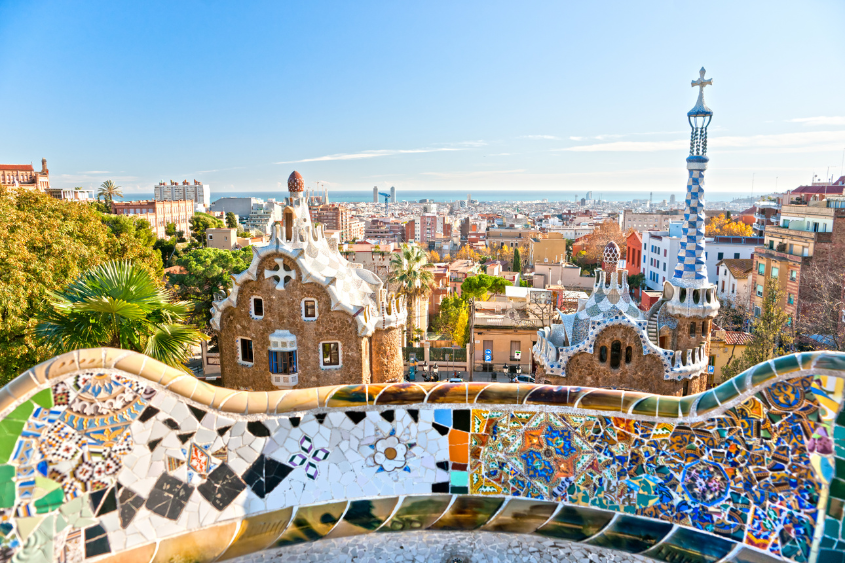
Overview: Barcelona is Spain’s most visited city for good reason — it has beaches, Gaudí’s architecture, world-class food, and a nightlife scene that runs until sunrise. It’s also the city most likely to disappoint people who don’t plan ahead, because the crowds at the big sights are real.
Why visit: No other city blends coastline, art, and architecture this seamlessly. You can be in a Gothic cathedral in the morning and on the sand by early afternoon.
Top attractions: Sagrada Família, Park Güell, Casa Batlló, the Gothic Quarter, La Boqueria Market, Barceloneta Beach.
Food to try: Pan con tomate, jamón ibérico, seafood paella (Barcelona, not landlocked Madrid, is the better place for it), and vermouth on a Sunday afternoon.
Ideal days: 3-4.
Best time to visit: May-June or September-October, when the weather is warm but the crowds thin out.
Average daily budget: €90-150.
Pros: Unmatched architecture, beach access, excellent public transport, food scene to match any city in Europe.
Cons: Heavy tourist crowds, pickpocketing is a genuine concern in Las Ramblas and the metro, and popular sights require advance booking.
Best for: First-time visitors, architecture lovers, couples, groups wanting both culture and nightlife.
Travel tips: Book Sagrada Família and Park Güell tickets at least two weeks ahead. Avoid Las Ramblas for dinner — it’s overpriced and touristy; head to Gràcia or El Born instead.
Nearby day trips: Girona, Montserrat, Sitges.
2. Madrid
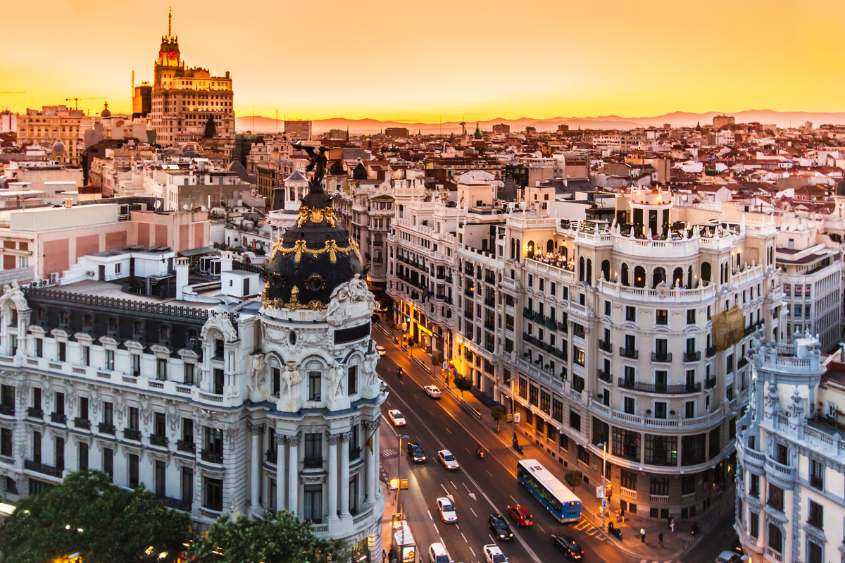
Overview: Madrid doesn’t try to seduce you the way Barcelona does. It’s a working capital with some of the best art museums on earth, a food scene built around late dinners and small plates, and neighborhoods that reward wandering without an agenda.
Why visit: The Golden Triangle of Art (Prado, Reina Sofía, Thyssen-Bornemisza) alone justifies a visit, and the city’s tapas culture is arguably Spain’s best.
Top attractions: Prado Museum, Retiro Park, Plaza Mayor, Royal Palace, Mercado de San Miguel, Reina Sofía (home to Picasso’s Guernica).
Food to try: Cocido madrileño, patatas bravas, bocadillo de calamares, and churros con chocolate.
Ideal days: 3-4.
Best time to visit: April-June or September-November.
Average daily budget: €80-140.
Pros: World-class museums, central location for day trips, strong public transport, less touristy hustle than Barcelona.
Cons: Summer heat is brutal (40°C/104°F isn’t rare in July-August), and the city lacks a beach.
Best for: Museum lovers, food-focused travelers, anyone wanting a base for central Spain day trips.
Travel tips: Many museums are free during specific evening hours — check ahead and plan around it. Dinner doesn’t really start until 9pm; adjust your body clock.
Nearby day trips: Toledo, Segovia, El Escorial, Ávila.

3. Seville
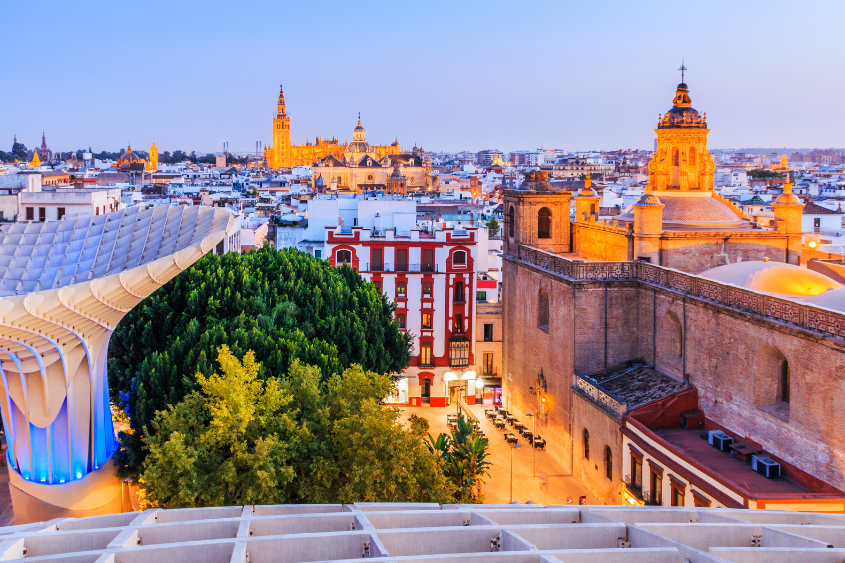
Overview: Seville is Andalusia’s showpiece — flamenco was born in its neighborhoods, the Alcázar rivals the Alhambra, and the orange-tree-lined streets feel cinematic without trying to.
Why visit: It’s the most romantic city in Spain and arguably the best introduction to Andalusian culture.
Top attractions: Alcázar of Seville, Seville Cathedral and Giralda tower, Plaza de España, Barrio Santa Cruz.
Food to try: Salmorejo, jamón, and a proper flamenco show with a glass of sherry.
Ideal days: 2-3.
Best time to visit: March-May or October-November. Summer here is genuinely dangerous-hot.
Average daily budget: €70-120.
Pros: Stunning architecture, walkable center, authentic flamenco culture, lower prices than Barcelona or Madrid.
Cons: Summer temperatures regularly exceed 40°C, and April’s Feria de Abril drives prices and crowds way up.
Best for: Couples, history lovers, first-time visitors to southern Spain.
Travel tips: Book Alcázar tickets online in advance — lines without a reservation can run over an hour.
Nearby day trips: Córdoba, Cádiz, Ronda.
4. Granada
Overview: Granada exists almost entirely because of the Alhambra, and that’s not an insult — the palace complex is one of the most extraordinary structures in Europe, a physical record of Moorish Spain at its peak.
Why visit: Beyond the Alhambra, Granada has a bohemian energy, mountain views of the Sierra Nevada, and a tradition of free tapas with every drink.
Top attractions: Alhambra and Generalife gardens, Albaicín neighborhood, Mirador de San Nicolás at sunset, Sacromonte caves.
Food to try: Free tapas (order a drink, get a small dish — a Granada tradition), habas con jamón.
Ideal days: 2-3.
Best time to visit: March-May, September-October.
Average daily budget: €60-110.
Pros: The Alhambra is worth the entire trip, budget-friendly food culture, walkable historic center.
Cons: Alhambra tickets sell out weeks in advance in high season; hilly terrain can be tough for some travelers.
Best for: History buffs, budget travelers, photographers.
Travel tips: Book Alhambra tickets 1-2 months ahead for summer visits. Tickets specify entry times to the Nasrid Palaces — don’t miss your slot.
Nearby day trips: Sierra Nevada, Alpujarras villages.

5. Valencia
Overview: Valencia is where paella actually comes from, and the city has quietly become one of Spain’s best all-around destinations — beaches, futuristic architecture, and a laid-back pace that Barcelona lost years ago.
Why visit: It has beach-city energy without the overcrowding, plus genuinely excellent, affordable food.
Top attractions: City of Arts and Sciences, Central Market, Turia Gardens (a former riverbed turned park), the Cathedral.
Food to try: Authentic paella Valenciana (with rabbit and chicken, not just seafood), horchata with fartons.
Ideal days: 2-3.
Best time to visit: Year-round, though March’s Fallas festival and summer are the busiest.
Average daily budget: €65-110.
Pros: More affordable than Barcelona, less crowded, excellent food, good beaches.
Cons: Fewer “bucket list” landmarks than Barcelona or Madrid, so it’s often skipped by first-timers.
Best for: Families, food lovers, budget-conscious travelers wanting beach access.
Travel tips: Rent a bike — Turia Gardens is a 9km park perfect for cycling across the whole city.
Nearby day trips: Albufera Natural Park.
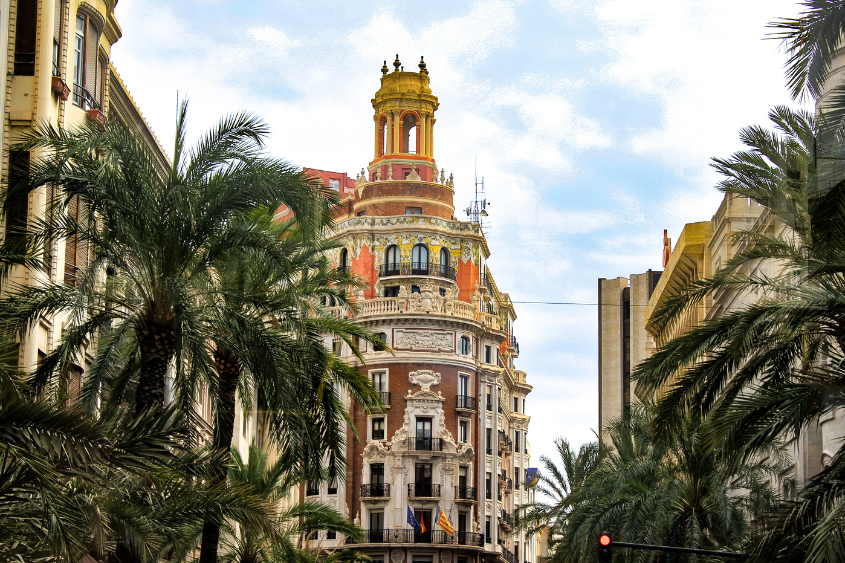
6. Malaga
Overview: Once dismissed as just an airport for the Costa del Sol, Málaga has reinvented itself with an impressive art scene (it’s Picasso’s birthplace) while keeping its beach-town character.
Why visit: Great base for the Costa del Sol, strong museum offerings, and a walkable historic center.
Top attractions: Picasso Museum, Alcazaba fortress, Málaga Cathedral, Muelle Uno waterfront.
Food to try: Espetos (grilled sardines on skewers), fried fish (pescaíto frito).
Ideal days: 2-3.
Best time to visit: April-June, September-October.
Average daily budget: €65-115.
Pros: Beaches plus culture, good flight connections, mild winters.
Cons: Summer crowds and heat; nearby coastal towns can feel overdeveloped.
Best for: Beach-and-culture combo travelers, retirees, digital nomads.
Travel tips: Use Málaga as a base and take the train to Ronda or Marbella rather than moving hotels.
Nearby day trips: Ronda, Marbella, Nerja.

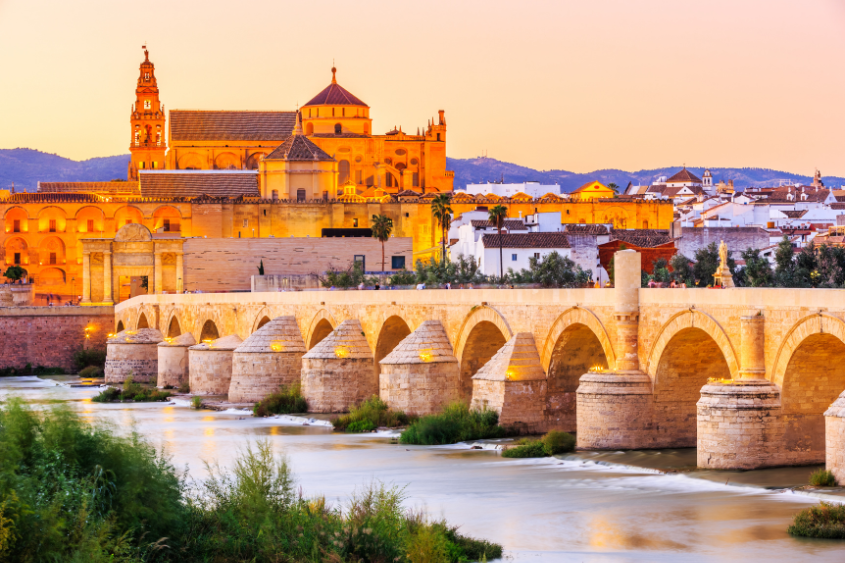
7. Cordoba
Overview: Córdoba’s Mezquita — a mosque-turned-cathedral with hundreds of red-and-white striped arches — is reason enough to visit, and the old Jewish Quarter around it is one of the most atmospheric in Spain.
Why visit: It packs an extraordinary historical punch into a compact, easily walkable city.
Top attractions: Mezquita-Catedral, Alcázar de los Reyes Cristianos, Calleja de las Flores, the Roman Bridge.
Food to try: Salmorejo (Córdoba’s version, thicker than Seville’s), flamenquín.
Ideal days: 1-2.
Best time to visit: March-May, especially during the Patio Festival in May.
Average daily budget: €60-100.
Pros: Compact and walkable, less touristy than Seville, extraordinary architecture.
Cons: Extreme summer heat — Córdoba is one of the hottest cities in Europe in July-August.
Best for: Day-trippers from Seville or Madrid, history lovers.
Travel tips: Visit the Mezquita right at opening to avoid both crowds and heat.
Nearby day trips: Medina Azahara ruins.
8. Bilbao
Overview: The Guggenheim Museum transformed Bilbao from an industrial port city into a cultural destination, and the Basque food scene here is reason enough to stay a few extra days.
Why visit: Modern architecture, strong contemporary art scene, and a very different Spain from the Mediterranean cities.
Top attractions: Guggenheim Museum, Casco Viejo (old town), Mercado de la Ribera.
Food to try: Pintxos (the Basque answer to tapas), bacalao al pil-pil.
Ideal days: 2.
Best time to visit: June-September for the best weather; it rains often the rest of the year.
Average daily budget: €80-130.
Pros: World-class architecture, exceptional food, distinct Basque culture.
Cons: Weather is unpredictable most of the year; fewer sights than the bigger cities.
Best for: Architecture and art lovers, food travelers.
Travel tips: Do a pintxos crawl in the old town — order one dish and a drink per bar, then move on.
Nearby day trips: San Sebastián, Guernica.

9. San Sebastian
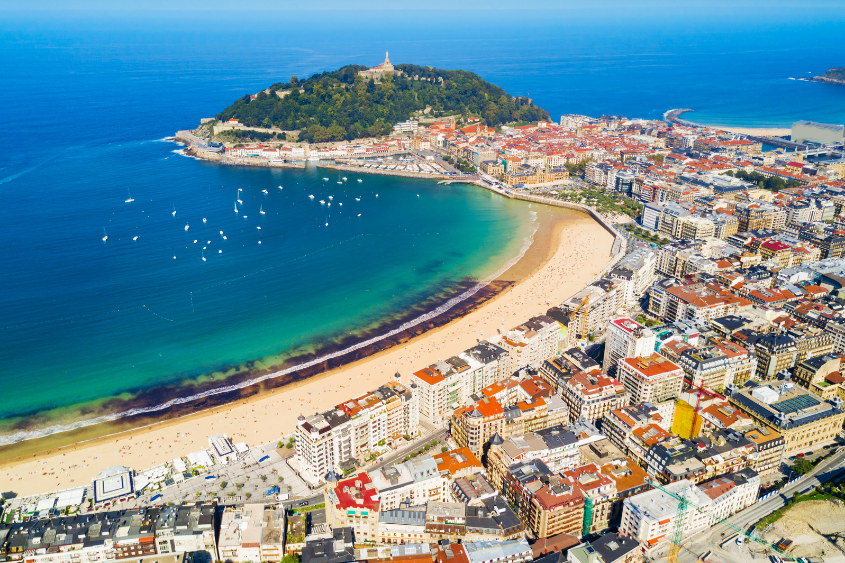
Overview: San Sebastián has more Michelin stars per capita than almost anywhere on earth, plus a genuinely beautiful urban beach. It’s expensive, and it’s worth it.
Why visit: The best food city in Spain, full stop, set against one of the most photogenic bays in Europe.
Top attractions: La Concha Beach, Parte Vieja (old town) pintxo bars, Monte Igueldo viewpoint.
Food to try: Pintxos at a dozen different bars in one night, txuleta (grilled steak), local Txakoli wine.
Ideal days: 2-3.
Best time to visit: June-September.
Average daily budget: €100-160.
Pros: Exceptional food, beautiful beach setting, walkable.
Cons: One of the most expensive cities in Spain; summer accommodation books up fast.
Best for: Food lovers, luxury travelers, honeymooners.
Travel tips: Book restaurants weeks ahead in summer; for pintxos bars, just show up and stand at the counter.
Nearby day trips: Bilbao, the French Basque coast (Biarritz is under an hour away).
10. Toledo
Overview: Toledo is the classic Madrid day trip — a walled medieval city on a hill, dense with churches, synagogues, and mosques standing testament to centuries of coexistence between Christian, Jewish, and Muslim communities.
Why visit: It’s one of the best-preserved medieval cities in Europe and sits 30 minutes from Madrid by train.
Top attractions: Toledo Cathedral, Alcázar of Toledo, Monastery of San Juan de los Reyes, Santo Tomé (home to El Greco’s masterpiece).
Food to try: Carcamusas (a pork and vegetable stew), marzipan.
Ideal days: 1 (day trip) or an overnight if you want to see it without crowds.
Best time to visit: Spring and fall.
Average daily budget: €50-90.
Pros: Easy day trip from Madrid, extraordinarily well-preserved, rich multicultural history.
Cons: Overwhelmed with day-trippers by midday; steep, narrow streets.
Best for: History lovers, day-trippers from Madrid.
Travel tips: Stay overnight if you can — the city empties out after the last tour buses leave around 6pm.
Nearby day trips: None needed; it’s the day trip itself.

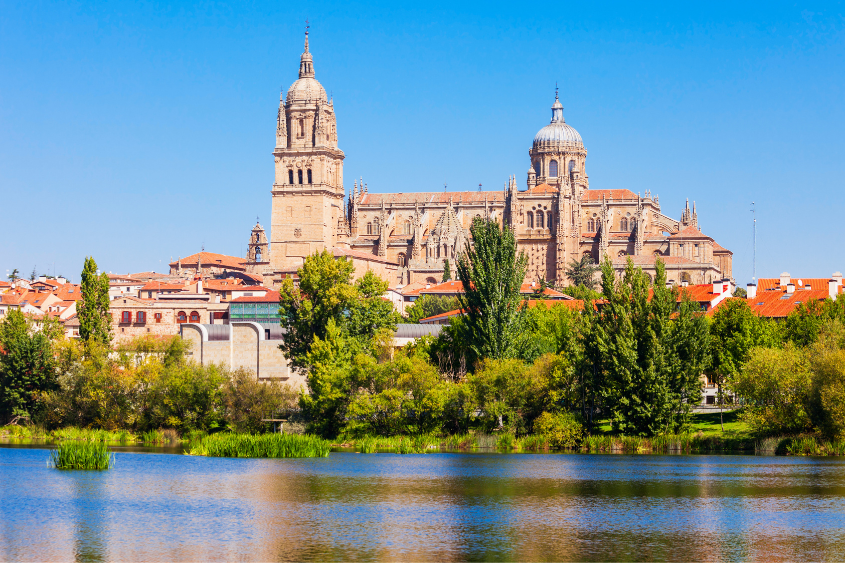
11. Salamanca
Overview: Home to one of the oldest universities in the world, Salamanca has a golden-stone old town that looks especially striking at sunset, and a young, energetic feel thanks to its student population.
Why visit: Extraordinary Plateresque architecture and a lively student-town atmosphere.
Top attractions: Plaza Mayor, University of Salamanca, Old and New Cathedrals, Casa de las Conchas.
Food to try: Chorizo and jamón from the Salamanca region, hornazo (a meat-filled pastry).
Ideal days: 1-2.
Best time to visit: Spring and fall.
Average daily budget: €60-100.
Pros: Stunning architecture, affordable compared to Madrid, lively nightlife due to student population.
Cons: Requires a dedicated trip since it’s not directly on the way to most other destinations.
Best for: Architecture lovers, budget travelers, those wanting a break from tourist crowds.
Travel tips: Find the famous carved frog on the university’s façade — a local tradition says spotting it brings good luck.
Nearby day trips: Ávila.
12. Santiago de Compostela
Overview: The endpoint of the Camino de Santiago pilgrimage route, this Galician city has a spiritual weight to it even for travelers who didn’t walk the route themselves.
Why visit: The cathedral and the surrounding old town are extraordinary, and Galician seafood is some of the best in Spain.
Top attractions: Cathedral of Santiago de Compostela, Praza do Obradoiro, Mercado de Abastos.
Food to try: Pulpo a la gallega (Galician-style octopus), empanada gallega.
Ideal days: 2.
Best time to visit: June-September, though it rains here year-round more than most of Spain.
Average daily budget: €60-100.
Pros: Deep cultural and spiritual significance, exceptional seafood, distinct Galician identity.
Cons: Frequent rain; less centrally located than most cities on this list.
Best for: Pilgrims, food lovers, travelers seeking something different from the Mediterranean cities.
Travel tips: Bring a rain jacket regardless of the season.
Nearby day trips: Finisterre (historically considered “the end of the world”).

13. Ronda
Overview: Ronda sits split across a deep gorge, connected by the dramatic Puente Nuevo bridge. It’s one of the most photographed towns in Spain, and for once, the photos undersell it.
Why visit: The setting alone is worth the trip — few places in Spain offer views this dramatic.
Top attractions: Puente Nuevo, Plaza de Toros (one of Spain’s oldest bullrings), El Tajo gorge viewpoints.
Food to try: Rabo de toro (oxtail stew).
Ideal days: 1-2.
Best time to visit: Spring and fall.
Average daily budget: €60-100.
Pros: Spectacular scenery, manageable size, easy day trip from Málaga or Seville.
Cons: Gets crowded with tour buses midday.
Best for: Photographers, romantic getaways, day-trippers.
Travel tips: Stay overnight to see the bridge lit up at night without the daytime crowds.
Nearby day trips: Setenil de las Bodegas (a village built into rock overhangs).

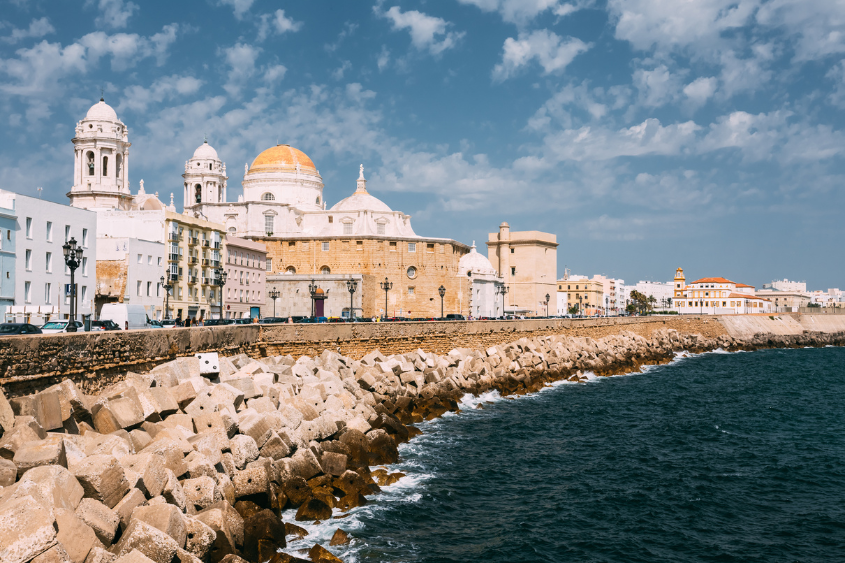
14. Cadiz
Overview: Often called the oldest continuously inhabited city in Western Europe, Cádiz has a laid-back, salty character shaped by its position on a narrow peninsula surrounded by the Atlantic.
Why visit: Real beaches, real history, and far fewer tourists than Seville or Granada.
Top attractions: Cádiz Cathedral, La Caleta beach, Torre Tavira.
Food to try: Fried fish, tortillitas de camarones (shrimp fritters).
Ideal days: 2.
Best time to visit: June-September for beach weather.
Average daily budget: €60-100.
Pros: Beautiful beaches within the city, ancient history, authentic local feel.
Cons: Less well-known, so fewer direct transport connections.
Best for: Beach lovers who also want history, travelers avoiding crowds.
Travel tips: February’s Carnival here rivals anything in Spain but books up hotels months ahead.
Nearby day trips: Jerez de la Frontera (sherry and flamenco).
15. Girona
Overview: Girona’s medieval old town, with its colorful riverside houses and preserved Jewish Quarter, has become a popular day trip from Barcelona — and gained extra fame as a Game of Thrones filming location.
Why visit: A compact, gorgeous old town that takes half a day to explore properly.
Top attractions: Girona Cathedral, the Jewish Quarter (El Call), the city walls walk.
Food to try: Catalan classics — expect excellent tapas bars given the region’s food culture.
Ideal days: 1.
Best time to visit: Spring and fall.
Average daily budget: €60-100.
Pros: Easy train ride from Barcelona, beautiful and compact, fewer crowds than Barcelona.
Cons: Small enough that a full day may feel like too much.
Best for: Day-trippers from Barcelona, photographers.
Travel tips: Walk the medieval walls (Passeig de la Muralla) for the best views over the old town.
Nearby day trips: Costa Brava beach towns.

16. Segovia
Overview: Segovia’s Roman aqueduct, still standing after roughly two thousand years without mortar, is one of the most impressive Roman structures anywhere in Europe.
Why visit: A perfect half-day or full-day trip from Madrid with an extraordinary concentration of history.
Top attractions: Roman Aqueduct, Alcázar of Segovia (said to have inspired Disney’s Cinderella castle), Segovia Cathedral.
Food to try: Cochinillo asado (roast suckling pig) — a Segovia specialty.
Ideal days: 1.
Best time to visit: Spring and fall.
Average daily budget: €55-95.
Pros: Extraordinary Roman engineering, easy access from Madrid, manageable in a day.
Cons: Can feel rushed if treated only as a lunch stop.
Best for: Day-trippers from Madrid, history and architecture lovers.
Travel tips: High-speed train from Madrid takes under 30 minutes — no need to rent a car.
Nearby day trips: None needed given the proximity to Madrid.

17. Zaragoza
Overview: Zaragoza rarely makes anyone’s shortlist, which is exactly why it’s worth including — it has serious architecture, good food, and none of the crowds of Spain’s bigger cities.
Why visit: A genuinely underrated stopover between Madrid and Barcelona.
Top attractions: Basílica del Pilar, Aljafería Palace, La Seo Cathedral.
Food to try: Ternasco (roast lamb), local tapas around El Tubo.
Ideal days: 1-2.
Best time to visit: Spring and fall.
Average daily budget: €55-95.
Pros: Affordable, uncrowded, sits directly on the Madrid-Barcelona high-speed rail line.
Cons: Fewer headline attractions than the bigger cities.
Best for: Travelers who want an authentic city break without tourist crowds.
Travel tips: It’s an easy stopover — break up the Madrid-Barcelona train journey here instead of doing it in one sitting.
Nearby day trips: Monasterio de Piedra.

18. Oviedo
Overview: Oviedo is the capital of Asturias and one of Spain’s cleanest, most livable cities, with a compact old town and a food scene built around cider and hearty mountain cooking.
Why visit: A gateway to the Picos de Europa mountains and one of Spain’s best-kept culinary secrets.
Top attractions: Oviedo Cathedral, pre-Romanesque churches (a UNESCO site), Calle Gascona (the cider street).
Food to try: Fabada asturiana (bean and pork stew), Asturian cider poured from height.
Ideal days: 2.
Best time to visit: June-September.
Average daily budget: €55-90.
Pros: Clean, walkable, excellent food, good base for nature trips.
Cons: Rainy climate outside summer.
Best for: Food lovers, nature-adjacent travelers, those wanting an off-the-beaten-path Spanish city.
Travel tips: Watch a bartender pour cider from above their head — it’s a technique specific to Asturias and part of the experience.
Nearby day trips: Picos de Europa National Park.

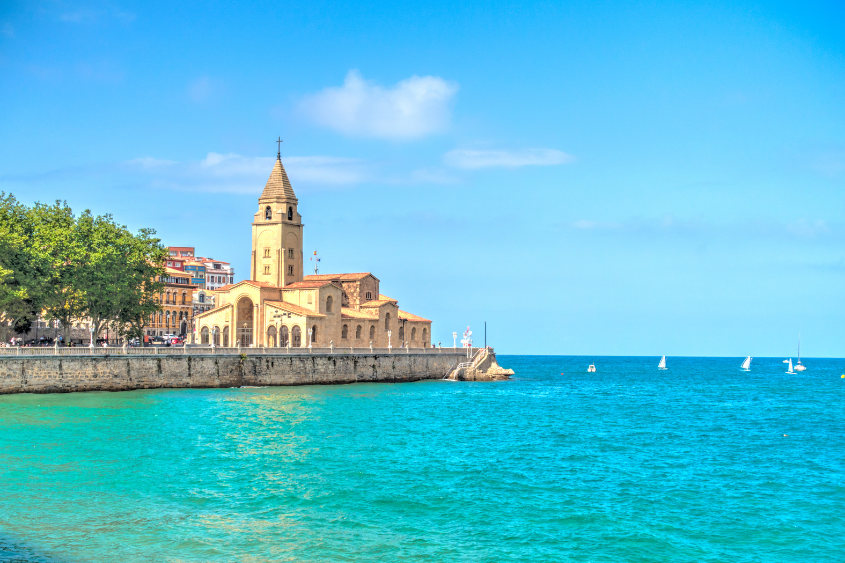
19. Gijon
Overview: Gijón is Oviedo’s coastal counterpart, a working port city with a proper city beach and a slightly grittier, more industrial charm.
Why visit: Beach access plus Asturian culture, without the crowds of the Mediterranean coast.
Top attractions: Playa de San Lorenzo, Cimavilla (the old fishing quarter), Elogio del Horizonte sculpture.
Food to try: Seafood, more fabada, and local sidra.
Ideal days: 1-2.
Best time to visit: June-September.
Average daily budget: €55-90.
Pros: Beach city with real local character, affordable, uncrowded.
Cons: Water is cold even in summer — this is the Atlantic, not the Mediterranean.
Best for: Travelers wanting a low-key beach city, budget travelers.
Travel tips: Pair with Oviedo — they’re 30 minutes apart and easy to combine.
Nearby day trips: Oviedo.
20. Cuenca
Overview: Cuenca’s Casas Colgadas — houses literally hanging off a cliff edge — make it one of the most visually startling towns in Spain, and it’s far less visited than its dramatic setting deserves.
Why visit: A unique, cliffside old town plus access to a striking natural park.
Top attractions: Casas Colgadas, Cuenca Cathedral, Ciudad Encantada (Enchanted City) rock formations nearby.
Food to try: Morteruelo (a rich game-meat pâté), local trout.
Ideal days: 1-2.
Best time to visit: Spring and fall.
Average daily budget: €55-90.
Pros: Genuinely unique setting, uncrowded, good hiking nearby.
Cons: Limited public transport options; best with a car.
Best for: Photographers, nature lovers, travelers wanting something unusual.
Travel tips: Rent a car if you want to see the Ciudad Encantada rock formations — public transport there is limited.
Nearby day trips: Ciudad Encantada.
21. Leon
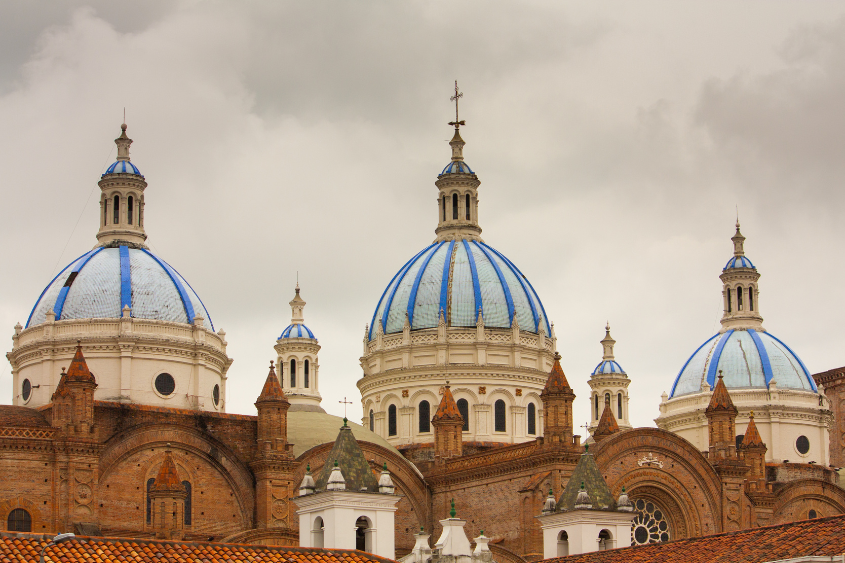
Overview: León’s cathedral, with some of the finest stained glass in Spain, anchors a city that’s often overlooked in favor of nearby Salamanca, despite being just as impressive architecturally.
Why visit: Extraordinary Gothic cathedral, a key stop on the Camino de Santiago, and noticeably cheaper than the bigger cities.
Top attractions: León Cathedral, Basílica de San Isidoro, Barrio Húmedo (the tapas district).
Food to try: Cecina (cured beef), free tapas with drinks in the Barrio Húmedo.
Ideal days: 1-2.
Best time to visit: Spring and fall.
Average daily budget: €50-85.
Pros: Stunning cathedral, excellent free tapas culture, budget-friendly.
Cons: Less internationally known, so requires more planning to reach.
Best for: Budget travelers, Camino de Santiago walkers, architecture lovers.
Travel tips: In the Barrio Húmedo, tapas usually come free with a drink order — a rarity outside a few Spanish cities.
Nearby day trips: None essential; a good standalone stop.
22. Alicante
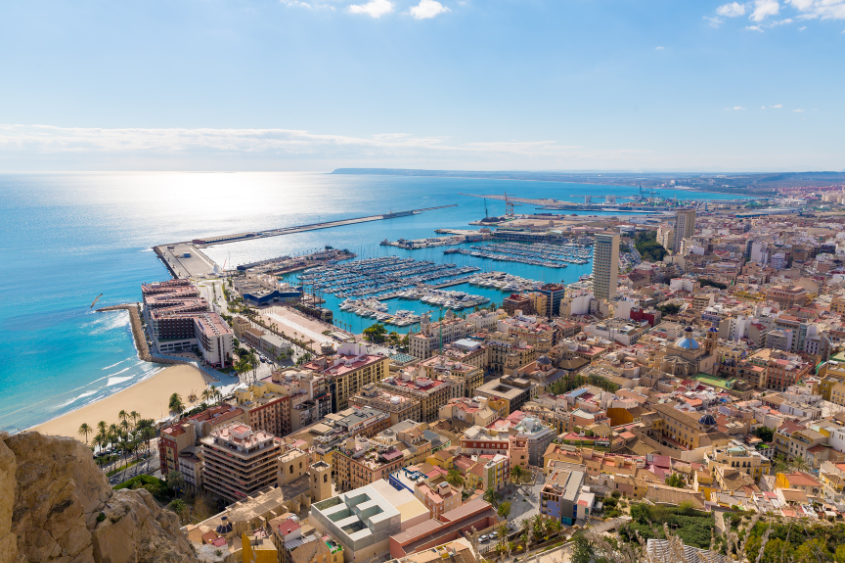
Overview: Alicante combines a proper city beach with an old town crowned by a hilltop castle, and it’s noticeably cheaper than Barcelona or Valencia while offering similar Mediterranean appeal.
Why visit: Reliable beach weather, good food, and a manageable size.
Top attractions: Santa Bárbara Castle, Postiguet Beach, Explanada de España promenade.
Food to try: Rice dishes (arroz a banda), turrón if visiting near Christmas (it’s produced nearby).
Ideal days: 2-3.
Best time to visit: May-September.
Average daily budget: €55-95.
Pros: Affordable, reliable sunshine, good beach access within the city itself.
Cons: Less cultural depth than Valencia or Barcelona.
Best for: Beach-focused travelers, budget travelers, retirees.
Travel tips: Walk or take the elevator up to Santa Bárbara Castle for the best coastal views in the city.
Nearby day trips: Benidorm, Elche.
23. Pamplona
Overview: Most people know Pamplona for the Running of the Bulls in July, but the rest of the year it’s a quiet, handsome Navarrese city with an entirely different personality.
Why visit: A genuine, uncrowded old town outside festival season, and one of Spain’s most famous cultural events if your timing lines up.
Top attractions: Plaza del Castillo, Pamplona Cathedral, the city walls (Vuelta al Casco Antiguo walk).
Food to try: Navarrese asparagus, pintxos in the old town.
Ideal days: 1-2.
Best time to visit: Quiet outside July; San Fermín festival runs July 6-14 if that’s your goal.
Average daily budget: €60-100 (significantly higher during San Fermín).
Pros: Charming and walkable, dramatically different personality depending on timing.
Cons: Accommodation prices spike enormously during San Fermín, sometimes 5-10x normal rates.
Best for: Festival-goers, travelers wanting a quieter Basque-Navarre city experience.
Travel tips: Book accommodation for San Fermín six months to a year in advance if you want reasonable prices.
Nearby day trips: Olite.

24. Murcia
Overview: Murcia rarely appears on tourist itineraries, which makes it one of the best places to experience daily Spanish life without a curated tourist experience.
Why visit: Authentic city life, excellent and affordable food, minimal crowds.
Top attractions: Murcia Cathedral, Real Casino de Murcia, Plaza de las Flores.
Food to try: Zarangollo (a vegetable and egg dish), local produce — the region is known as Spain’s “orchard” for its agriculture.
Ideal days: 1-2.
Best time to visit: Spring and fall.
Average daily budget: €50-90.
Pros: Very affordable, authentic local culture, excellent food-to-price ratio.
Cons: Fewer standout landmarks; requires a specific interest in “real Spain” travel.
Best for: Budget travelers, food lovers, travelers who’ve already done the highlight cities.
Travel tips: The Real Casino de Murcia isn’t a gambling venue — it’s a 19th-century social club with stunning interiors open to visitors.
Nearby day trips: Cartagena.

25. Caceres
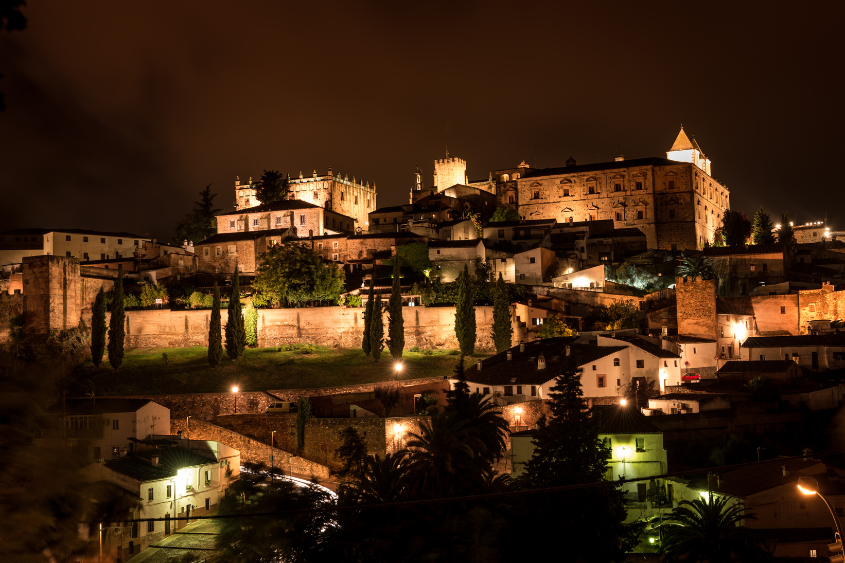
Overview: Cáceres has one of the best-preserved medieval and Renaissance old towns in Europe, and almost nobody visits it — which is precisely the appeal.
Why visit: Walking into the old town feels like stepping into the 15th century, minus the crowds you’d find in a comparably preserved Italian or French town.
Top attractions: Plaza Mayor, the old town walls, Concatedral de Santa María.
Food to try: Extremaduran cured meats and cheeses (torta del Casar).
Ideal days: 1-2.
Best time to visit: Spring and fall (summer in Extremadura is extremely hot).
Average daily budget: €50-85.
Pros: Extraordinarily well-preserved, virtually no crowds, very affordable.
Cons: Limited transport connections; requires deliberate planning to include.
Best for: History lovers, travelers seeking undiscovered Spain, road-trippers.
Travel tips: Visit at night — the old town is beautifully lit and completely empty after dinner hours.
Nearby day trips: Trujillo, Mérida.
Best Cities by Travel Style
| Travel Style | Top Picks |
|---|---|
| Couples | Seville, Ronda, Granada |
| Families | Valencia, Barcelona, Alicante |
| Food Lovers | San Sebastián, Bilbao, Oviedo |
| Beaches | Cádiz, Málaga, Alicante |
| Nightlife | Barcelona, Madrid, Ibiza (islands) |
| Architecture | Barcelona, Salamanca, Bilbao |
| History | Córdoba, Toledo, Cáceres |
| Budget Travelers | León, Murcia, Cáceres |
| Luxury Travelers | San Sebastián, Marbella-adjacent Málaga, Barcelona |
| Solo Travelers | Madrid, Valencia, Granada |
| Digital Nomads | Valencia, Málaga, Madrid |
| Photography | Ronda, Cuenca, Girona |
Suggested Spain Itineraries
5 Days: Madrid + Toledo + Segovia
Spend 3 nights in Madrid, hitting the Prado, Retiro Park, and the tapas bars of La Latina. Day trip to Toledo on day 2 (half-day is enough if you’re efficient), and Segovia on day 3. This keeps travel time low and lets you experience central Spain deeply rather than skimming multiple cities. Consider linking this with a dedicated Madrid itinerary guide for hour-by-hour planning.
7 Days: Barcelona + Madrid
The classic combination. 4 nights in Barcelona (architecture, beach, Gothic Quarter), then a 2.5-hour high-speed train to Madrid for 3 nights (museums, Retiro, tapas). This is the single most popular first-time Spain itinerary, and for good reason — it hits the two biggest cities without feeling rushed. A dedicated Spain itinerary resource can help fine-tune day-by-day timing.
10 Days: Barcelona + Madrid + Seville + Granada
Add Andalusia to the classic route: 3 nights Barcelona, 3 nights Madrid, 2 nights Seville, 2 nights Granada. Fly or take the high-speed train from Madrid to Seville (2.5 hours), then bus or train to Granada (under 3 hours). This is the itinerary most travel writers would call the “essential” Spain trip.
14 Days: The Full Loop
3 nights Barcelona, 3 nights Madrid, 2 nights Seville, 2 nights Granada, 2 nights Málaga or Ronda, 2 nights San Sebastián or Bilbao. This covers Catalonia, central Spain, Andalusia, and the north, giving a genuinely comprehensive picture of the country’s regional diversity. It’s an ambitious but very doable two weeks if you’re comfortable moving every 2-3 days.

How Much Does Spain Cost?
Spain remains one of Western Europe’s better values, especially outside Barcelona and San Sebastián.
| Category | Budget | Mid-Range | Luxury |
|---|---|---|---|
| Accommodation (per night) | €25-50 (hostel/budget hotel) | €70-140 (3-4 star hotel) | €200+ (boutique/5-star) |
| Food (per day) | €20-30 | €40-70 | €100+ |
| Local transport (per day) | €5-10 | €10-15 | €20+ (taxis/private) |
| Activities (per day) | €10-20 | €20-40 | €50+ |
Accommodation: Hostels run €20-35 a night in most cities; mid-range hotels average €70-140; Barcelona and San Sebastián run 20-30% higher than the national average.
Food: A menu del día (fixed-price lunch menu) at a local restaurant typically costs €12-18 and includes a starter, main, drink, and often dessert — one of the best value meals in Europe. Tapas bars charge €3-6 per plate.
Transport: City metro or bus tickets run €1.50-2.50 per ride; a 10-ride pass is usually cheaper per trip.
Activities: Many major sights (Sagrada Família, Alhambra, Alcázar) charge €15-25 for entry; some, like many cathedrals and city walks, are free or nearly free.
Money-saving tips:
- Eat your main meal at lunch via the menu del día — dinner à la carte costs significantly more for the same food quality.
- Book major attractions online in advance; walk-up prices and long lines both cost you.
- Travel by train between mid-distance cities (like Madrid-Segovia) rather than renting a car for a single day trip.
- Consider a Spain budget guide for a full week-by-week cost breakdown if you’re planning a longer trip.
Getting Around Spain
| Method | Best For | Typical Cost | Speed |
|---|---|---|---|
| High-speed train (AVE) | City-to-city travel | €30-90 one-way | Fast (Madrid-Barcelona in 2.5 hrs) |
| Regional train | Smaller towns, day trips | €10-30 | Medium |
| Bus | Budget travel, smaller towns | €10-40 | Slower but cheap |
| Domestic flights | Long distances (e.g., Madrid-Bilbao) | €40-120 | Fastest for long distances |
| Car rental | Rural regions, small towns | €25-50/day | Flexible, best for Andalusia’s villages |
Train: Spain’s high-speed rail network (Renfe AVE) is one of the best in Europe and connects most major cities directly. Book early for the best fares — prices rise closer to departure, just like flights.
Bus: Companies like ALSA cover routes trains don’t reach, and are often the only practical way to get to smaller towns like Ronda or Cuenca without a car.
Flights: Worth considering only for genuinely long distances — Madrid to Bilbao, or the mainland to the Balearic or Canary Islands. For anything under 3 hours by train, the train wins once you factor in airport time.
Car rental: Essential for exploring Andalusian white villages, the Ronda area, or rural Extremadura around Cáceres. Skip it if you’re only visiting major cities — parking is a hassle and public transport covers those routes well.
Which option is best: For a city-hopping itinerary (Barcelona-Madrid-Seville), trains win outright. For exploring rural areas or clusters of small towns, a car makes more sense for a portion of the trip.
Best Time to Visit Spain
| Season | Weather | Crowds | Prices | Notable Festivals |
|---|---|---|---|---|
| Spring (Mar-May) | Mild, sunny | Moderate | Moderate | Semana Santa, Feria de Abril |
| Summer (Jun-Aug) | Hot, especially inland/south | Very High | High | San Fermín, local ferias |
| Autumn (Sep-Nov) | Mild, cooling | Moderate | Moderate | Grape harvest festivals |
| Winter (Dec-Feb) | Cool, rainy in north | Low | Low | Christmas markets, Three Kings Day |
Spring is arguably the best all-around season — mild temperatures, blooming landscapes in Andalusia, and major festivals like Seville’s Feria de Abril and Semana Santa processions nationwide. Book well ahead if your trip overlaps with either.
Summer brings extreme heat to inland and southern cities — Seville and Córdoba regularly exceed 40°C (104°F) in July and August. The north (San Sebastián, Bilbao, Santiago) is actually at its best during summer, since it avoids the worst of that heat while still getting reliably good weather.
Autumn rivals spring for the best weather-to-crowd ratio, with the added bonus of harvest festivals in wine regions and noticeably lower hotel prices than summer.
Winter is Spain’s off-season outside the ski resorts and Christmas markets, meaning lower prices and no lines at major attractions — but expect rain in the north and cooler evenings even in the south.
For a full month-by-month breakdown, a dedicated best time to visit Spain guide is worth checking before locking in dates.
Common Travel Mistakes to Avoid
- Trying to see too many cities in too little time. Three cities in seven days is manageable; six is not.
- Skipping advance tickets for the Alhambra or Sagrada Família. Both regularly sell out days or weeks ahead in high season.
- Eating dinner at 7pm expecting a full restaurant experience. Most Spaniards eat dinner between 9 and 10pm; earlier options are often tourist-oriented.
- Underestimating summer heat in Andalusia. July and August in Seville or Córdoba are not “hot” — they’re often dangerously hot, with midday temperatures unsafe for extended outdoor sightseeing.
- Renting a car to explore only major cities. Parking, one-way traffic, and pedestrian zones make cars a liability in city centers.
- Not validating bus or regional train tickets before boarding. Some regional systems require ticket validation at machines before boarding, and failing to do so can result in fines.
- Assuming all of Spain has beach weather year-round. The north is genuinely rainy for much of the year, closer to the UK’s climate than the Mediterranean’s.
- Ignoring the siesta effect on smaller-town businesses. In smaller cities and villages, shops often close from roughly 2-5pm.
- Booking Barcelona and Madrid back-to-back without factoring in the 2.5-hour train. It’s easy, but it’s still a half-day commitment with transfers.
- Not learning basic Spanish phrases. English is common in tourist areas but far less so in smaller towns — a few phrases go a long way.
- Packing for only one climate. If your route spans north and south, or coast and interior, you’ll need layers regardless of season.
- Overlooking regional food differences. Ordering paella in Madrid or expecting Basque pintxos culture in Andalusia misunderstands how regional Spanish food really is.
Local Tips and Etiquette
Things tourists don’t know: Lunch is the main meal of the day for many Spaniards, not dinner. Many smaller shops still close for a few hours in the afternoon. Flamenco is specifically an Andalusian art form — you won’t find authentic shows in Barcelona or Madrid the way you will in Seville or Granada.
Cultural etiquette: Greetings often involve a light kiss on each cheek between acquaintances (starting with the left cheek). Punctuality is more relaxed for social plans than for business ones. Dress modestly when visiting cathedrals — shoulders and knees covered.
Safety: Spain is generally very safe, but pickpocketing is a real issue in tourist-dense areas like Barcelona’s Las Ramblas, the metro, and crowded markets. Keep bags zipped and in front of you in crowds.
Tipping: Not obligatory the way it is in the U.S. Rounding up the bill or leaving 5-10% for good service is generous and appreciated, but no one will chase you down for skipping it.
Scams: Watch for the “friendship bracelet” scam near major landmarks (someone ties a bracelet on your wrist, then demands payment), fake petitions used as pickpocketing distractions, and unofficial “helpers” at train stations offering to carry bags for a fee.
Language: Spanish is spoken everywhere, but Catalan (Barcelona/Catalonia), Basque (Bilbao/San Sebastián), and Galician (Santiago de Compostela) are official regional languages with real cultural weight — signage in these regions is often bilingual.
Frequently Asked Questions
What are the best cities in Spain?
Barcelona, Madrid, Seville, Granada, and Valencia consistently rank as Spain’s top cities, each offering distinct architecture, history, and food culture. Smaller cities like San Sebastián, Ronda, and Córdoba round out a well-rounded trip.
Which city should first-time visitors choose?
Madrid or Barcelona. Both have major airports, extensive public transport, and enough sights to fill several days without needing a car.
What is Spain’s most beautiful city?
This is subjective, but Seville and Granada are the two cities most frequently cited for architectural and scenic beauty, thanks to their Moorish-era landmarks and well-preserved historic centers.
How many cities should I visit in Spain?
For a one-week trip, two to three cities is ideal. For two weeks, four to six cities allows enough time in each without constant packing and unpacking.
Is Spain expensive to visit?
Spain is moderately priced compared to Western Europe overall — more affordable than France or the UK, similarly priced to Portugal or Italy, with regional variation (Barcelona and San Sebastián cost more; Andalusia and the north cost less).
Do I need to rent a car in Spain?
Not for a city-based itinerary — trains and buses cover major routes well. A car becomes useful if you’re exploring rural Andalusia, small white villages, or Extremadura.
Is it safe to travel to Spain?
Yes, Spain is one of the safer countries in Europe for travelers. The main risk is petty theft in tourist-heavy areas, not violent crime.
What language is spoken in Spain?
Spanish (Castilian) is the national language, with Catalan, Basque, and Galician as official regional languages in their respective areas.
When is the best time to visit Spain?
Spring (April-May) and fall (September-October) offer the best balance of good weather and manageable crowds.
How many days do I need for Barcelona?
Three to four days covers the major sights without feeling rushed.
Is Barcelona or Madrid better for first-time visitors?
Neither is objectively “better” — Barcelona suits travelers who want architecture and beach access, while Madrid suits those focused on museums and a more traditionally Spanish urban experience. Many first-timers do both.
What’s the difference between northern and southern Spain?
Northern Spain is cooler, greener, rainier, and built around Basque and Galician food culture. Southern Spain (Andalusia) is hot, dry, and shaped heavily by centuries of Moorish rule.
Do I need to speak Spanish to travel in Spain?
No, but it helps significantly outside major tourist areas. English is widely spoken in Barcelona, Madrid, and coastal tourist zones; less so in smaller inland towns.
What’s the best way to travel between Spanish cities?
High-speed trains (Renfe AVE) for major routes; regional trains or buses for smaller towns; car rental only if exploring rural areas extensively.
Is Seville or Granada better to visit?
Both are worth visiting if time allows. Seville has grander overall architecture and a livelier city feel; Granada has the Alhambra, which many consider Spain’s single greatest attraction.
What should I avoid doing in Spain?
Avoid expecting dinner reservations before 8pm, avoid renting a car for city-only itineraries, and avoid underestimating how hot Andalusia gets in summer.
Can I see Spain in one week?
Yes, though it means focusing on 2-3 cities rather than trying to cover the whole country. A Madrid-Barcelona combination or a Barcelona-Seville-Granada Andalusian route both work well in seven days.
What food is Spain known for?
Paella (Valencia), jamón ibérico (nationwide), pintxos (Basque Country), tortilla española (nationwide), and gazpacho or salmorejo (Andalusia) are the essentials.
People Also Ask
Is Barcelona worth visiting more than once?
Yes – its architecture, food scene, and neighborhood diversity reward repeat visits far more than a single trip can cover.
How many days do you need in Spain to see everything important?
Two to three weeks covers the major regions; ten days covers a solid highlight reel of central Spain and Andalusia.
Which Spanish city has the best beaches?
Cádiz and Málaga on the mainland offer excellent city beaches; the Balearic Islands (Mallorca, Ibiza) offer the country’s best beaches overall.
Is southern Spain or northern Spain better?
Depends on your priorities – southern Spain wins for history, architecture, and warm weather; northern Spain wins for food, cooler summers, and dramatic coastal scenery.
What is the cheapest city to visit in Spain?
León, Murcia, and Cáceres consistently offer the lowest accommodation and food costs among cities covered in this guide.
Which Spanish city is best for nightlife?
Barcelona and Madrid both have extensive nightlife scenes; Ibiza (island) is the country’s global nightlife capital if that’s specifically your priority.
How far apart are Barcelona and Madrid?
Roughly 620 km (385 miles), covered by high-speed train in about 2.5 hours.
What is the rainiest city in Spain?
Bilbao and San Sebastián, along with much of the Basque Country and Galicia, see significantly more rainfall than the rest of the country.
Do Spanish cities require advance ticket booking?
Major sights like the Alhambra, Sagrada Família, and Alcázar of Seville do – same-day tickets often sell out in high season.
What’s the best way to see the Alhambra?
Book tickets online at least a month ahead for summer visits, and pay attention to your assigned entry time for the Nasrid Palaces specifically.
Is public transport good in Spanish cities?
Yes, especially in Madrid and Barcelona, both of which have extensive metro systems. Smaller towns rely more on walking and regional buses.
What’s the difference between tapas and pintxos?
Tapas are small dishes ordered individually, common nationwide, especially in the south and Madrid. Pintxos are the Basque Country’s version, typically served on bread with a toothpick and often self-served from a bar counter.
Which Spanish city is most walkable?
Toledo, Girona, and Córdoba’s old towns are all extremely compact and walkable; Madrid and Barcelona are walkable within neighborhoods but require transport between them.
Is it better to visit Spain’s coast or its cities?
Most travelers combine both – a coastal city like Valencia or Málaga offers beach access alongside genuine urban culture, avoiding the need to choose one over the other.
How long is the flight to Spain from the US?
Roughly 7-9 hours from the East Coast to Madrid or Barcelona; longer with a layover from other parts of the US.
Before you lock in your route, it’s worth pairing this guide with a few practical resources: a European packing list to make sure you’re prepared for the country’s regional climate swings, a Schengen visa guide if you need one for entry, and a travel insurance guide to make sure you’re covered for the trip. Spain rewards travelers who plan a little and improvise a lot — book your major sights ahead, leave room in the schedule for a slow lunch, and you’ll come home understanding why so many people go back.
Daniel Moore is the voice behind The Travel Paths, sharing travel stories shaped by culture, everyday experiences, and the quieter moments that make journeys meaningful.