Upstate New York: Areas You Need to Explore

If you’ve only ever seen New York City, you’re missing out on something massive, literally. Upstate New York is a sprawling, diverse region packed with mountain towns, scenic lakes, historic villages, and jaw-dropping fall foliage that rivals anything in New England.
But here’s the thing: “upstate New York” isn’t a single place. It’s a loose term covering dozens of distinct regions, each with its own personality, landscape, and travel vibe. Whether you’re a weekend warrior from the city, a budget backpacker looking for affordable adventures, or a digital nomad hunting for a quiet place to work and wander, upstate New York has a corner for you.
This guide breaks down the main areas of upstate New York so you can pick where to go, what to expect, and how to make the most of your trip.
What Exactly Is “Upstate New York”?
This is a surprisingly tricky question. There’s no official government boundary that defines upstate New York. Most New Yorkers use it to mean anywhere outside of New York City — though locals in Albany or Buffalo might debate among themselves about where exactly the line falls.
For travel purposes, upstate New York generally covers everything north and west of the New York City metro area, stretching all the way to the Canadian border and the Great Lakes. That’s a huge territory — and it contains some genuinely underrated travel destinations.
The Hudson Valley: Where Art Meets the Outdoors
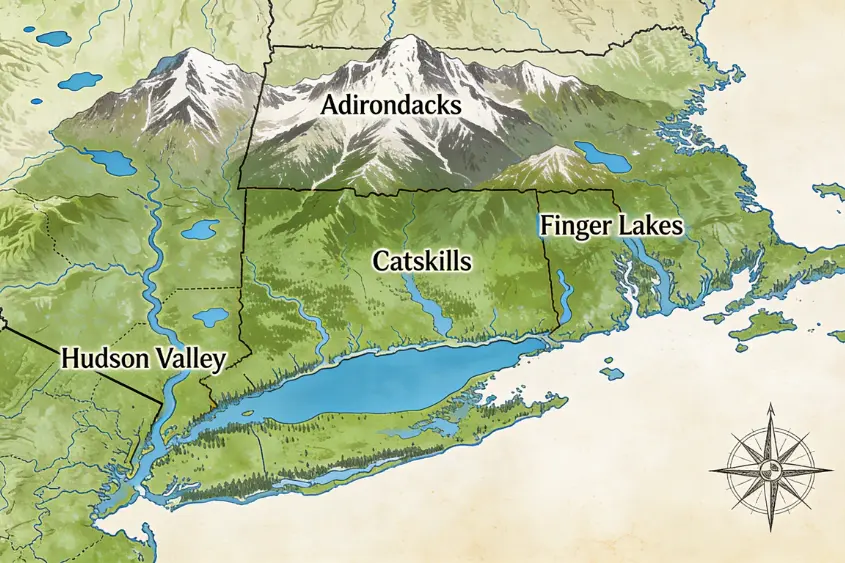
The Hudson Valley is probably the most accessible part of upstate New York if you’re coming from NYC. Hugging both sides of the Hudson River, this region runs roughly from Yonkers in the south up to Albany in the north.
Why visit: The Hudson Valley blends outdoor adventure with a thriving arts scene. Towns like Woodstock, Hudson, and New Paltz have become magnets for artists, foodies, and remote workers over the past decade.
Top experiences:
- Hiking at Catskill Mountains trailheads (close to New Paltz)
- Visiting historic estates like Vanderbilt Mansion and Hyde Park
- Exploring farm-to-table restaurants in Hudson
- Catching a concert or festival in Woodstock
Budget tip: New Paltz is one of the most affordable base towns in the region. It’s a college town with cheap eats, hostel-style accommodations, and direct access to Mohonk Preserve trails — many of which are free with the right access point.
The Catskills: Mountains for Everyone
The Catskill Mountains sit west of the Hudson River and are technically part of the Hudson Valley region — but they deserve their own mention. This mountain range has been a getaway destination since the 1800s, and it’s had a serious revival in recent years.
Why visit: The Catskills are perfect if you want nature without the crowds of more hyped destinations. You’ll find dense forests, trout streams, charming small towns, and ski resorts that operate year-round.
Top experiences:
- Hiking Slide Mountain (the highest peak in the Catskills)
- Swimming in natural swimming holes like Peekamoose Blue Hole
- Exploring quirky towns like Phoenicia and Woodstock
- Skiing or snowboarding at Hunter Mountain or Belleayre
Digital nomad note: Towns like Woodstock and Catskill have seen a boom in coworking spaces and high-speed internet accommodations since 2020. Many coffee shops now cater to remote workers.
The Adirondacks: Wild and Untamed
Head further north and you hit the Adirondacks — a six-million-acre park that’s larger than Yellowstone, Yosemite, Grand Canyon, Glacier, and Great Smoky Mountains combined. That’s not a typo.
The Adirondack Park is a mix of public and private land, dotted with 3,000 lakes, hundreds of miles of hiking trails, and small resort towns.
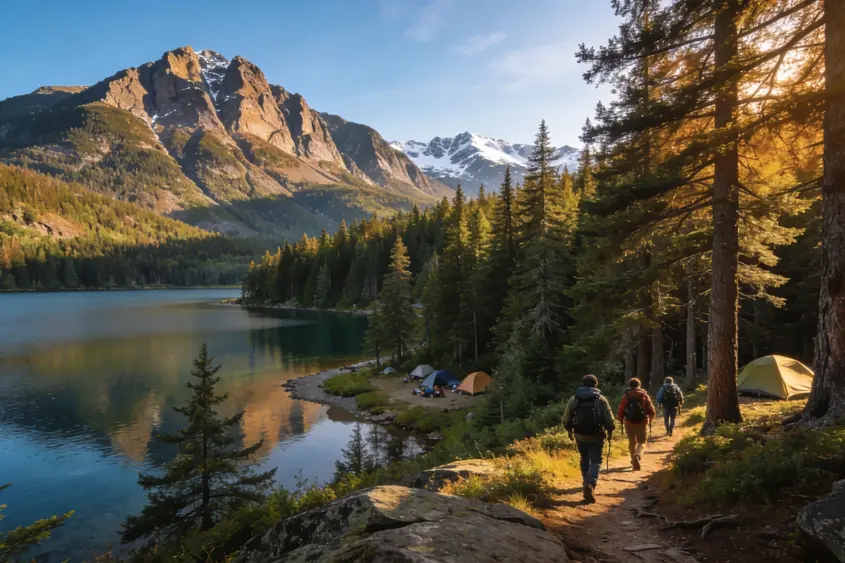
Why visit: If you want serious wilderness — true backcountry camping, multi-day canoe routes, or peak-bagging adventures — this is your spot. It’s also one of the most beautiful places in the entire northeastern United States.
Top experiences:
- Climbing the 46 High Peaks (a serious bucket list challenge)
- Canoeing the Adirondack Canoe Route (known as the “Adirondack Waterway”)
- Visiting Lake Placid, which hosted two Winter Olympics (1932 and 1980)
- Staying in cozy lodges or camping in backcountry campsites (often free with a permit)
Budget tip: Backcountry camping in the Adirondacks is free if you follow Leave No Trace principles and camp at least 150 feet from water and trails. It’s one of the best budget outdoor experiences on the East Coast.
The Finger Lakes: Wine, Waterfalls, and Gorges
The Finger Lakes region sits in the heart of upstate New York, centered around 11 long, narrow lakes carved by glaciers thousands of years ago. It’s one of the most underrated wine regions in the entire country.
Why visit: Between world-class Rieslings, dramatic gorges, and charming lakeside towns, the Finger Lakes is a destination that consistently surprises first-time visitors.
Top experiences:
- Wine tasting along Seneca Lake or Cayuga Lake wine trails
- Hiking Watkins Glen State Park (arguably the most spectacular gorge in the eastern US)
- Exploring Cornell University’s campus in Ithaca
- Visiting Taughannock Falls, one of the tallest waterfalls east of the Rockies
Budget tip: Many Finger Lakes wineries offer free or low-cost tastings. You can spend an entire weekend wine touring on a tight budget if you pack your own picnic food and camp at state parks along the lake shores.
Western New York: Buffalo and Beyond
Western New York often gets overlooked — but that’s changing fast. Buffalo has undergone a remarkable transformation in the last decade, going from a rust belt city to a legitimate food and arts destination. And then there’s Niagara Falls, which needs no introduction.
Why visit: Western New York is ideal for travelers who want city culture, major natural wonders, and the affordable cost of living that mid-sized American cities offer.
Top experiences:
- Visiting Niagara Falls State Park (free to enter — the falls themselves cost nothing)
- Exploring Buffalo’s Elmwood Village neighborhood for local restaurants and boutiques
- Catching a Buffalo Bills or Buffalo Sabres game for an authentic local experience
- Day-tripping to Letchworth State Park, nicknamed the “Grand Canyon of the East”
Budget tip: Accommodation in Buffalo is significantly cheaper than in NYC or even Albany. It’s a great home base for exploring both Niagara Falls and the surrounding countryside without blowing your budget.
The Capital Region: Albany and the Historic Corridor
Albany is the capital of New York State and the hub of the Capital Region, which also includes Troy, Schenectady, and Saratoga Springs. This area is packed with American history, architecture, and some genuinely good food scenes.
Why visit: History buffs and architecture lovers will have a field day. The Capital Region sits at the crossroads of several important early American trade and travel routes, and that history is visible everywhere.
Top experiences:
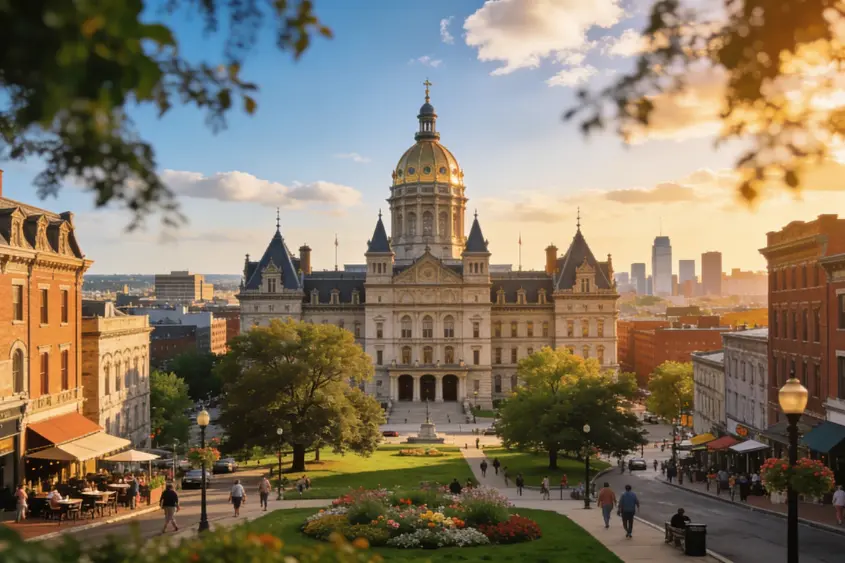
- Touring the New York State Capitol building in Albany (free guided tours available)
- Visiting the Albany Institute of History & Art
- Exploring Troy’s farmer’s market and burgeoning restaurant scene
- Attending the Saratoga Race Course in summer (one of the oldest horse racing tracks in America)
Digital nomad note: Albany has a growing tech and startup scene with affordable coworking spaces. It’s a smart base for anyone wanting to explore multiple upstate New York regions from one central location.
The North Country: Borders, Rivers, and Small Towns
The North Country refers to the northernmost stretch of upstate New York, bordering Canada and Lake Ontario. It’s the least-visited of all the upstate regions — which makes it worth exploring if you want to truly get off the beaten path.
Why visit: Authenticity. Small towns here haven’t been polished for tourists, the landscapes are raw, and the St. Lawrence River offers some spectacular scenery and boating opportunities.
Top experiences:
- Exploring the Thousand Islands region along the St. Lawrence River
- Visiting Fort Ticonderoga, a key site from the French and Indian War and Revolutionary War
- Kayaking or fishing along the Lake Ontario shoreline
- Crossing into Canada for a day trip (bring your passport)
How to Choose Where to Go in Upstate New York
With so many distinct areas, it helps to know your travel style before you plan. Here’s a quick cheat sheet:
- Nature and adventure: Adirondacks or Catskills
- Wine and relaxation: Finger Lakes
- History and architecture: Capital Region or Hudson Valley
- Major attractions on a budget: Western New York (Niagara Falls)
- Offbeat and unexplored: North Country
- Arts, food, and weekend vibes: Hudson Valley or Catskills
Conclusion
Upstate New York isn’t just one thing — it’s a whole collection of regions, each worth exploring in its own right. Whether you want to summit a mountain in the Adirondacks, sip wine by a Finger Lakes waterfall, or eat your way through Buffalo’s food scene, you’ll find that this part of New York State keeps delivering long after the novelty of the big city wears off.
Start with one region, plan a weekend trip, and let upstate New York surprise you. Odds are, one visit won’t be enough.
Actionable takeaway: Pick one region based on your travel style, book accommodation at least 3–4 weeks in advance (especially for peak fall foliage season in October), and build your itinerary around 2–3 key experiences rather than trying to cover everything at once.
Daniel Moore is the voice behind The Travel Paths, sharing travel stories shaped by culture, everyday experiences, and the quieter moments that make journeys meaningful.