A Week in Europe That Won’t Overwhelm You

The funny thing about planning a first trip to Europe is that the fantasy and the calendar never quite match. In your head, you are hopping between ten countries, eating gelato at sunset and croissants at sunrise. On paper, you have seven days, a fixed budget, jet lag, and a limited tolerance for hauling luggage up metro stairs. That’s where a smart, focused 7-day Europe itinerary really earns its place.
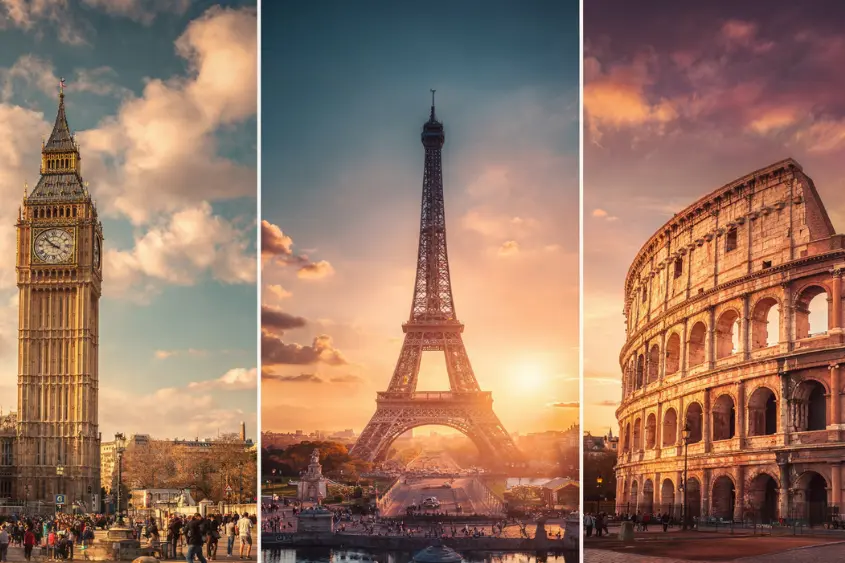
For first-time travelers, one of the most satisfying one-week “first taste of Europe” trips links three classics: London, Paris, and Rome. They are well-connected, beginner-friendly, and different enough that each day feels like a new chapter rather than a repeat of the last.
If you’re traveling on a budget, don’t miss our guide on How to Save Money on Flights Without Using Hacks before finalizing your Europe itinerary.
Quick Europe Trip Information
| Information | Details |
|---|---|
| Countries Covered | United Kingdom, France, Italy |
| Trip Duration | 7 Days |
| Best Time to Visit | April to June & September to October |
| Ideal For | First-Time Europe Travelers |
| Transportation | Flights + Eurostar Train |
| Budget | Moderate to High |
How this 7-day Europe trip is shaped
Before we dive into the day-by-day, it helps to understand the backbone of this route: three cities, three different energies, with direct flights and trains between them.
- London: Easiest soft landing if you are nervous about language or transport, with good connections from many countries.
- Paris: A gentle shift into another language and culture, but still easy to navigate and full of iconic landmarks.
- Rome: The dramatic finale older, louder, more chaotic, and absolutely packed with history and food.
Most travelers either start in London and end in Rome, or do the reverse. For a first-timer, I like starting in London and finishing in Rome.
Here’s the structure this itinerary follows:
- Day 1–2: London
- Day 3–4: Paris
- Day 5–7: Rome
You can easily flip London and Rome, or swap one city for Amsterdam or another easy hub, but this trio gives you a surprisingly rich “first look” at Europe in just one week.
Day 1–2: Landing in London without losing your mind
There’s a moment when you emerge from Heathrow or Gatwick, hear accents you are used to from movies, and feel a tiny wave of relief: at least you understand the signs. London is still a big, dense, occasionally confusing city, but as a first stop in Europe, it’s kind.
Day 1: Arrive, arrive, don’t overdo it
If you are coming from a long-haul flight, your first battle isn’t sightseeing, it’s staying awake until evening. So the goal is movement and light, not “seeing everything.”
A realistic first afternoon might look like:
- Check in, quick shower, and a 30-minute lie-down (set an alarm).
- Head out for a simple walk somewhere central: maybe around Covent Garden, the South Bank, or near your hotel.
- Pick one gentle “I’m really in London” moment, like standing by the Thames looking at the London Eye or Big Ben from the outside.
The biggest win is fighting the urge to cram in museums on day one. You’ll enjoy them more when your brain isn’t still tracking three time zones.
If this is your first international trip, don’t forget to read our guide on Essential Travel Documents You Need When Traveling Abroad before leaving for Europe.
Day 2: A classic London day, but edited
If you try to do all of London in one day, you’ll just collect photos and blisters. Pick a rough “arc” and follow it.
One simple, satisfying flow for a first-timer:
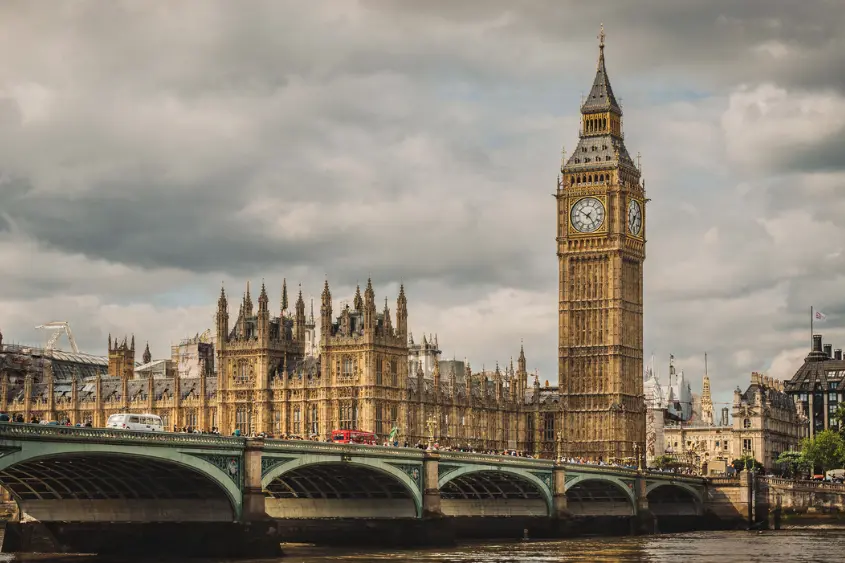
- Morning: Westminster area, outside views of Westminster Abbey, Big Ben, and the Houses of Parliament, then a walk through St James’s Park to Buckingham Palace.
- Midday: Hop on the Tube to a neighborhood that interests you more than any checklist, maybe Notting Hill, Shoreditch, or South Kensington.
- Afternoon: Choose one museum or attraction, not three. That could be the British Museum, the National Gallery, or something quirkier depending on your taste.
In the evening, you might grab dinner in Soho or near Covent Garden, then wander a bit before heading back. Think of it as “tuning your travel brain” rather than chasing every landmark.
Day 3–4: Sliding into Paris by train
There’s a particular thrill in rolling into another country by train instead of plane. You go from hearing “Mind the gap” to “Attention au départ” without ever taking your shoes off at security.
Day 3: Eurostar to Paris and your first evening
The Eurostar from London to Paris takes about two and a half hours and runs frequently, making it one of the easiest international hops you’ll ever do. If you can, book a late-morning or midday departure: enough time for breakfast in London, and you’ll still arrive in Paris with daylight left.
Once you’ve checked into your hotel, don’t rush for the Eiffel Tower immediately. Your first evening in Paris is better spent getting your bearings:
- Take a slow walk through a central area like the Latin Quarter, Le Marais, or near the Seine.
- Find a café where you can sit outside, order something simple (a coffee, a glass of wine, a basic plat du jour), and just watch how the city moves.
That first hour of doing nothing but observing is often when Paris “clicks” — the pace, the manners, the small rituals like people lingering over a drink instead of rushing off.
Day 4: Icons in moderation
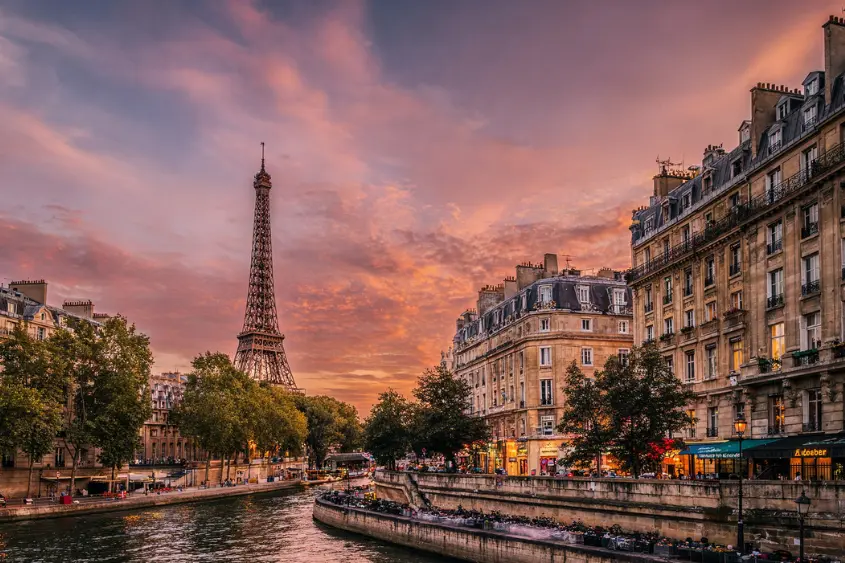
On your full day in Paris, it’s tempting to stack the Eiffel Tower, Louvre, Notre Dame, Montmartre, and a river cruise into one schedule. You could, technically. You’d also be exhausted and barely remember any of it.
A more balanced day might weave three big experiences together:
- A morning with a landmark: maybe the Louvre (pre-book your ticket) or the Eiffel Tower.
- A midday wander: walk along the Seine, duck into bookshops, cross bridges, and let yourself get a bit sidetracked.
- An evening view: this might be a Seine cruise, a viewpoint like Montmartre, or simply the Eiffel Tower sparkling after dark.
If museums drain you, swap one out for neighborhood time. Sitting on a bench with a crêpe, watching kids chase pigeons, can be just as memorable as any painting.
Day 5–7: Ending with Rome’s beautiful chaos
Rome doesn’t ease you in; it throws you straight into narrow streets, honking scooters, and 2,000-year-old ruins next to modern traffic. That’s exactly why it works so well as a finale, after London and Paris, you are ready for something more intense.
Getting there: flight vs train
For this leg, most first-time travelers choose a short flight from Paris to Rome rather than an all-day train journey. You can train it via Milan, but that eats most of a day and is better suited to longer trips. In a 7-day itinerary, every full day counts, so a cheap, early flight makes practical sense.
Day 5: Arrival and an evening in the old streets
After you land in Rome and settle into your accommodation, aim for a simple “orientation loop” rather than a checklist.
A typical first Roman evening might be:
- Walk past (not necessarily into) one or two major sights like the Trevi Fountain or the Spanish Steps to feel that “I’m really here” jolt.
- Let your route wander into a smaller square where locals actually hang out — maybe a quieter piazza with kids playing and grandparents chatting.
- Eat your first Italian meal somewhere that doesn’t have a huge multilingual tourist menu and photo boards; it doesn’t need to be fancy, just honest.
You’ll already notice how different Rome feels compared to London and Paris: louder, looser, more lived-in under the ruins.
Day 6: Ancient Rome and a slower afternoon
You could easily spend your entire trip just in Rome — many people feel seven days isn’t even enough for this one city. But for a first-timer, dedicating a strong, focused day to its ancient core is enough to give you a sense of the place.
One way to structure it:
- Morning: The Colosseum and Roman Forum. This is where pre-booking a skip-the-line ticket or small-group tour genuinely helps.
- Midday: Find lunch somewhere away from the immediate tourist ring around the Colosseum; even going a few blocks helps.
- Afternoon: Stroll through the historic center, Piazza Venezia, the Pantheon area, Piazza Navona, letting your curiosity dictate where you stop.
The trick is not to treat the ruins as a checklist, but as context. You are walking through layers of time here, not a theme park.
Day 7: One more Rome, or a Vatican morning
Your final day in Europe will feel different depending on your flight time. If you have most of the day, you have a choice: Vatican-heavy or neighborhood-heavy.
If the Vatican Museums and St Peter’s Basilica are non-negotiable for you, make them a morning mission: early entry, focused visit, then out before the crowds crush you. It can be intense, both visually and physically but seeing the Sistine Chapel and St Peter’s dome on your first Europe trip is undeniably powerful.
If that doesn’t feel like you, trade the Vatican for something quieter:
- A slow morning in Trastevere or another neighborhood,
- A proper sit-down coffee at a bar,
- One last long walk with gelato in hand.
Whatever you pick, try to give yourself at least a small, unscheduled pocket of time at the end, even half an hour on a bench. That’s often when the whole week finally sinks in.
Why this trio works so well for first-timers
When you only have seven days, the route you choose matters just as much as the individual sights. This London, Paris, Rome pattern has turned into a classic for a reason.
Here’s how it plays to the strengths of a first-time traveler:
- It balances familiarity and challenge. You start in a place where you understand the language and systems, then gradually step into more unfamiliar environments.
- It keeps transfers simple. Direct flights and high-speed trains mean you lose less time and mental energy on logistics.
- It shows different “faces” of Europe. One city feels modern and global, one romantic and elegant, one ancient and intense.
A lot of travelers try to add Amsterdam, Barcelona, or another city into this same week. Logistically, it’s possible. Emotionally, it often turns the trip into a blur. For most people’s first Europe itinerary, three cities in seven days is the sweet spot where it still feels like a trip, not a race.
Here’s a quick look at how these three cities complement each other:
| City | Vibe for first-timers | Transport ease | Main “feel” it adds |
| London | Soft landing, familiar language, big-city buzz | Great airports and metro, easy-to-use train network | Confidence boost and a gentle start |
| Paris | Romantic, walkable, visually iconic | Easy rail links, good metro, Eurostar connection | Classic “Europe” feeling and café culture |
| Rome | Intense, historic, a bit chaotic in a good way | Major airport hub, trains to elsewhere in Italy | Deep sense of history and dramatic finale |
A few honest expectations for a 7-day Europe itinerary
Seven days for three major cities is doable and exciting, but it’s also compressed. Managing your expectations is half the art.
Some truths worth keeping in your back pocket:
- You won’t see “everything”, not even close. That’s not a failure; that’s the point. Leaving with reasons to come back is a good sign.
- Travel days are still days. Even on fast routes like London–Paris or Paris–Rome, you’ll burn a chunk of the day on transport, check-in, and reorienting.
- Your energy, not your list, decides how good the trip feels. Two well-enjoyed sights beat ten rushed ones.
If you are the kind of person who likes to optimize every minute, it can feel strange to deliberately under-plan. But on a first Europe trip, a little slack in the schedule is what lets real travel moments sneak in — the unexpected street musician, the café you stumble into because your feet hurt, the conversation with a stranger who recommends a bakery you’d never have found in a guidebook.
That’s the quiet magic of a 7-day European itinerary like this: it’s not about conquering a continent. It’s about giving yourself just enough structure that you feel safe, and just enough space that you still feel surprised.
Frequently Asked Questions
Is 7 days enough for Europe?
Yes, 7 days is enough for first-time travelers if you focus on two or three cities instead of trying to see too many destinations.
Which three European cities are best for first-time visitors?
London, Paris, and Rome are among the best cities for first-time travelers because they offer history, culture, and excellent transport connections.
Is it better to fly or take trains in Europe?
For short distances, high-speed trains are excellent. However, flights can save time on longer routes.
How much money do you need for a 7-day Europe trip?
Costs vary, but most travelers should budget between $1,500 and $3,000 depending on travel style and accommodation choices.
Daniel Moore is the voice behind The Travel Paths, sharing travel stories shaped by culture, everyday experiences, and the quieter moments that make journeys meaningful.